Candidate for Ward 4 City Council: William Bradley (Brad) Freeman
By Ellen Putnam
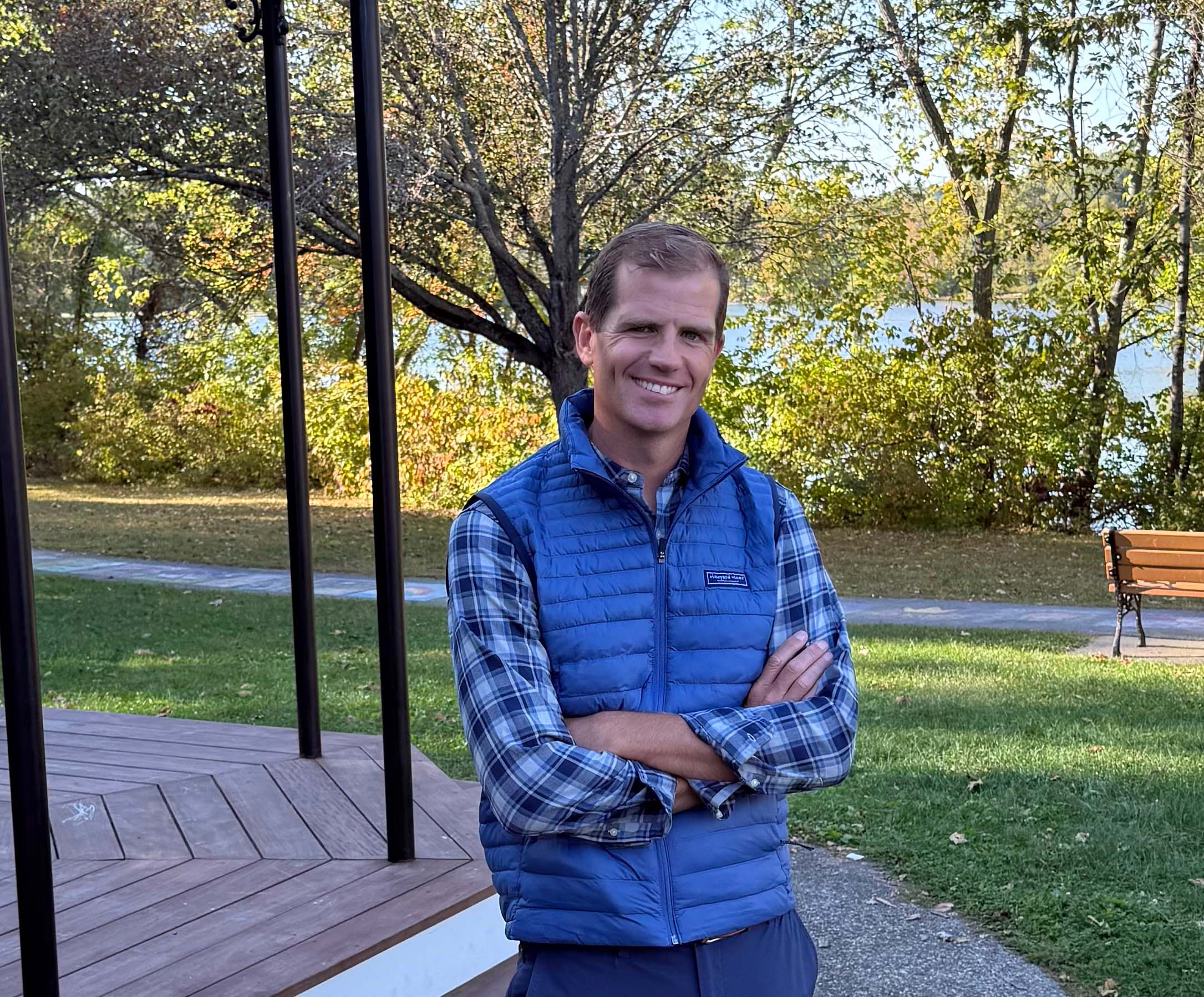
Photo From Brad Freeman
Brad Freeman is running to represent Ward 4 on the City Council because, he said, “I’ve spent a lot of time in community service, and I’m ready to give back more. Between my community and professional service, I have a lot to give back, and I have a proven track record of delivering results that would fit well with both Ward 4 and the city.”
Freeman and his family moved to Melrose 15 years ago and “immediately fell in love,” he said. “Most people know me as the youth sports coach who coached my kids and most of their kids in different sports, or people know me as the community volunteer who’s served on the Park Commission, the board for the Incarnation Baseball League, or the Winthrop Elementary School Site Council. From all of these experiences, I feel that I have a real understanding of what our community needs.”
Freeman has worked in different roles in state and federal government over the last 20 years, and has spent the last 15 years representing the Association of Independent Colleges and Universities in Massachusetts in advocacy at the state and federal levels, with a focus on making higher education more affordable. “This has given me a unique perspective on how state and federal government works,” he said, “and I know how to get things done, both from a budget standpoint and a legislative standpoint.”
As an example, Freeman talked about his work advocating for introducing a state income tax deduction for contributions that families make to 529 college savings accounts. “One of the committee chairs told me he really liked the idea,” Freeman said, “but it would cost the state $8 million that it didn’t have. Offhand, he said, ‘if you can find me $8 million, I’ll do it.’ So I took that as a challenge. I went into the tax code, found a deduction for education expenses that benefitted people from out of state - and it added up to just about $8 million. The chair was shocked - he said ‘no one ever does this kind of work.’ But it was good policy, so they added that deduction. And because of that, families in Massachusetts are saving money every year, and we’ve seen new account growth go through the roof.”
“This is how I work,” Freeman concluded. “I put in the work, I roll up my sleeves, and I find a solution that works for everyone. I’m a big believer in compromise and consensus, which is something our city needs.”
When it comes to his personal values, “I was raised in a house where we believed that all politics is local,” Freeman said, “and I believe that local government is, by far, the form that has the most impact on people's day-to-day lives, although they may not realize it. As a city councilor, I would go out of my way to make sure that people know what the city does and how it affects their daily existence - the good it does and the things it could do better.”
“I’m already very present in Ward 4,” he went on, “people see me out jogging or walking my dog. When I knock on doors, the most common refrain I hear is, ‘I know you - you’re the guy who always runs past my house.’ So people know they can find me easily - all they have to do is stop me on my run and have a conversation. I encourage folks to do that. And if we can rebuild people’s trust in our local government, it will go a long way toward fostering the pragmatic solutions that most of Melrose is looking for but doesn’t quite know how to achieve.”
“I think that our city’s greatest strength is the multigenerational nature of our neighborhoods,” Freeman added. “You knock on one door, and it’s a grandmother who’s lived there for 75 years and loves her street. Then, next door is a young family who moved in three years ago and is excited to send their kids to school. And in the next house is a family with one kid in college and one high school, who’s trying to decide what comes next.”
“But what unites all of them is their love of Melrose,” Freeman continued. “People come here and don’t want to leave, and that’s what makes us a great city. Everyone wants to work together to find solutions to make us the best city we can be. Our multigenerational neighborhoods allow people with different perspectives to learn from each other, and the more we can have conversations across the fence, whether we agree or not, the more it can help inform our opinions and help us achieve better results that the majority of Melrose supports.”
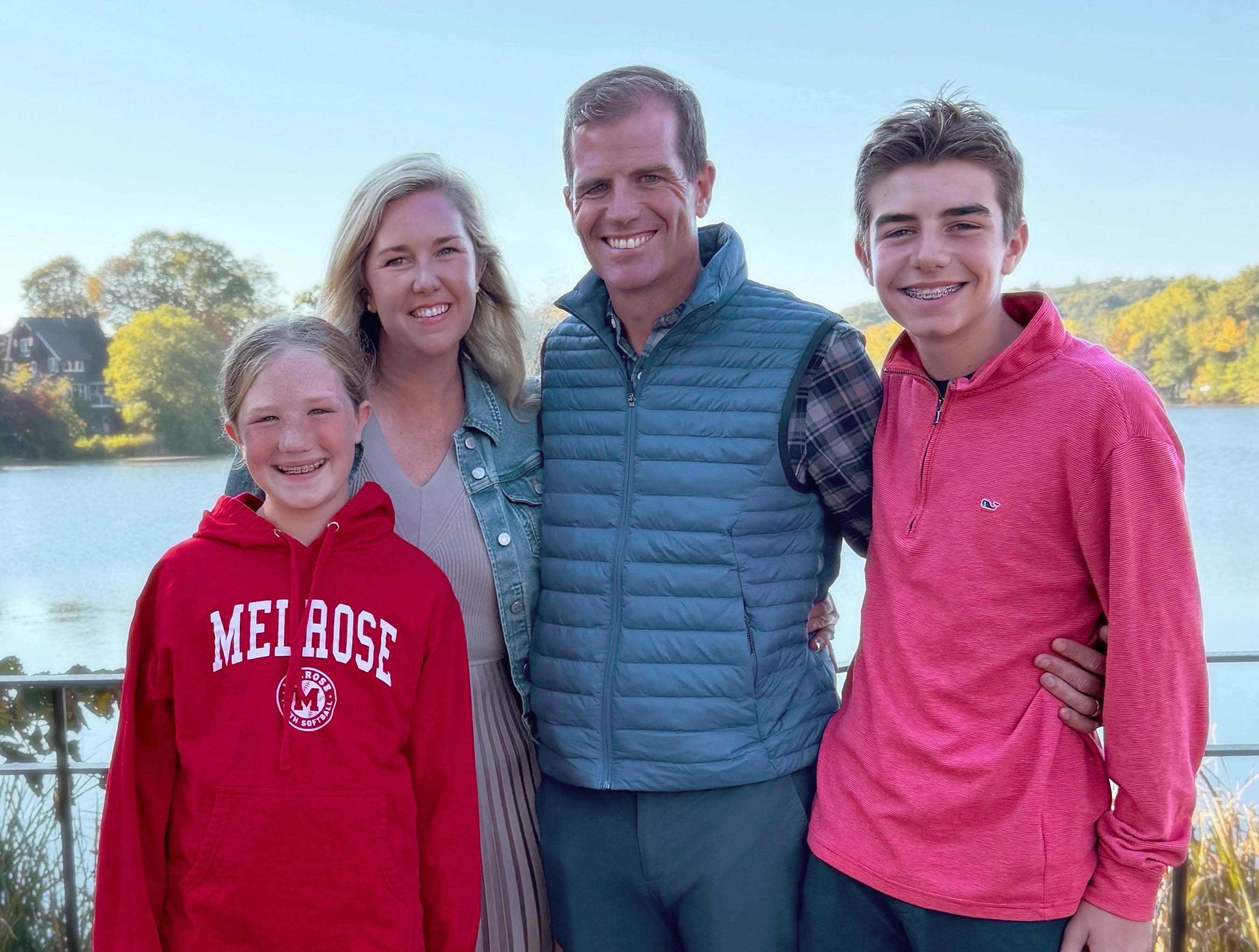
Photo From Brad Freeman
“Our greatest challenge right now,” he went on, “is our lack of faith in local government. That’s been a recurring theme I’ve heard as I’m knocking on doors. ‘I don’t know what the city did with the last override, and I don’t trust that they’re doing the right thing.’ The incredibly hard-working people in City Hall are doing the right thing, but we’re not successfully communicating to residents what’s being done and how their tax dollars are benefiting them on a daily basis.”
“Tax revenue in Massachusetts is limited by Prop 2½,” Freeman continued, “and Melrose has a history of defeating overrides, which leads to challenging budget situations like the one we’re in right now. For the City Council, it comes down to rebuilding people’s faith that the city government is working for the people of Melrose by talking about every decision and working toward compromise and consensus. If residents know that every decision is made in their best interests, they may be more understanding and supportive of decisions we need to make moving forward. Then, if we need another override sometime in the future, it won’t be a massive crisis - it will be a manageable situation.”
Freeman personally supports “Yes” on all three override questions. “It’s incredibly important that we reinvest in our schools, rebuild our roads and infrastructure, and restore our community programs,” he said. “It’s so important for us to invest in our community - because making Melrose the city we want it to be comes with personal investment. I would encourage residents to support all three override questions in November.”
“If an override passes,” he went on, “I will make it my personal challenge to go back to all of my neighbors, whether they voted for it or not, and ask them if they can see three ways the override has benefited them - and if they can tell me three things that have changed for them, then I think the city will be doing a good job communicating with people, and it will position us well moving forward for future financial discussions that may come up.”
“Whether an override passes or not,” Freeman continued, “the City Council will have a number of difficult decisions to make. If an override passes, they will need to decide how to allocate that money in a transparent way that everyone feels comfortable with. And if an override doesn’t pass, the Council will need to communicate the incredibly difficult budget cuts they will have to make, and explain why those cuts were made.”
“My deliberative nature would be an asset in either of those conversations,” Freeman said, “to help us reach consensus on how to invest and allocate money from the override or decide how to make cuts that could be supported and understood by a majority of people.”
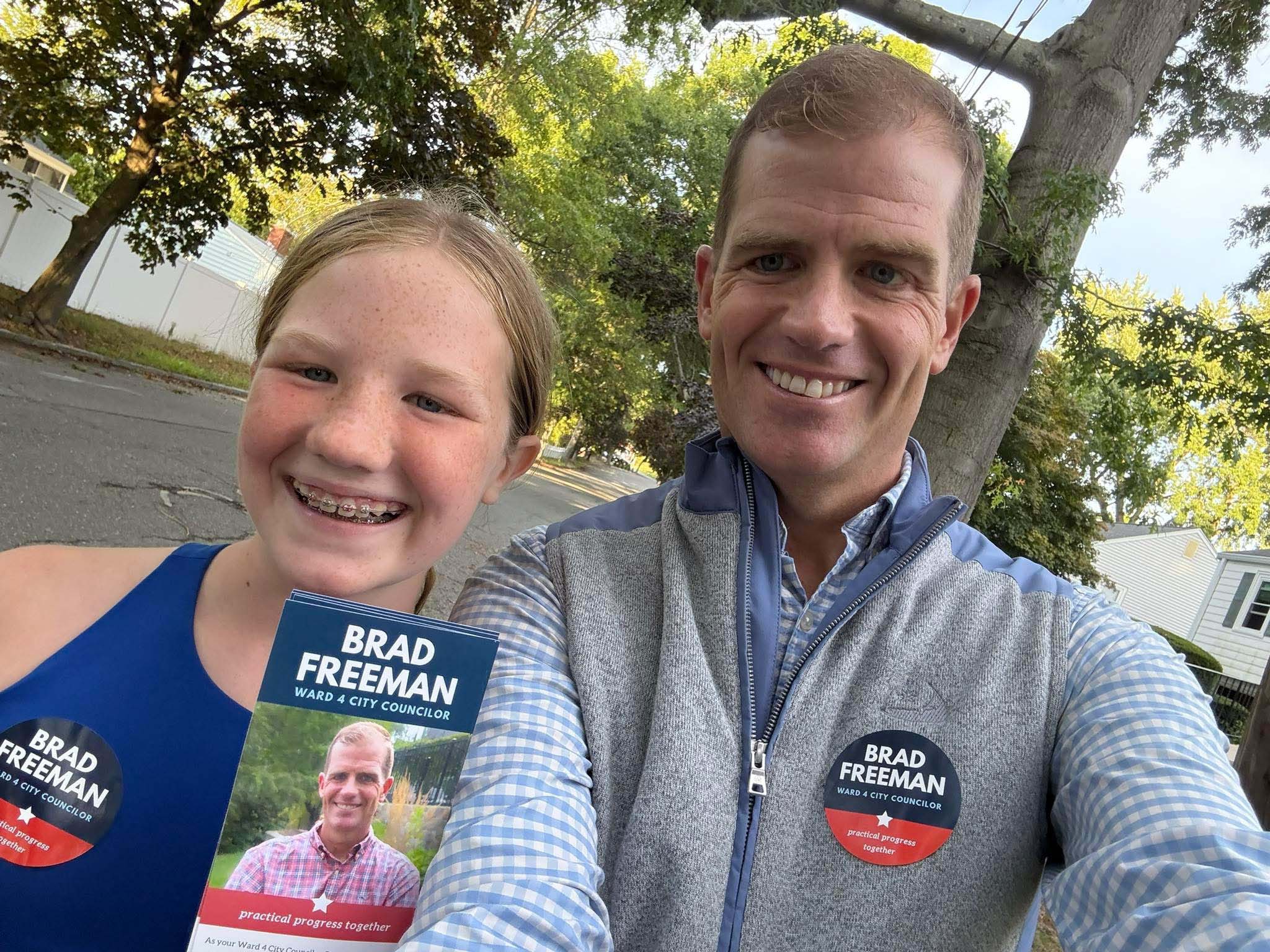
Photo From Brad Freeman
Outside of Melrose’s financial challenges, Freeman also talked about managing development. Part of Ward 4 is in the city’s Rail Corridor Overlay District, where much of the city’s development is taking place, including construction on a 78-unit development on Tremont Street.
“The whole state is in a housing crisis,” Freeman said, “and our state laws dictate that Melrose must allow new housing to be built in the city. But the most important thing we can do is ensure that neighbors are brought into conversations about new developments at an early point so they can be part of the solution. With many of the new housing projects that are coming in, residents don’t feel that they have a voice in making sure that development is done in accordance with the neighborhood.”
“If I am elected to the City Council,” he went on, “I will make sure that, early in the process of approving each new development, there will be a meeting with neighbors and representatives from the developer and the city around the table, with everyone committed to getting to ‘yes’ and reaching a consensus that works for needs of the city, the developer, and, most importantly, the needs of the neighborhood.”
With Freeman’s background in working with state and federal government, he said, “I’ve had a hand in drafting legislation and pushing it through the hearing process onto the floor. I’ve seen that the best way to develop a bill is through engagement from the very beginning with multiple voices, and letting the bill be shaped through a deliberative process. Every time someone new weighs in, the bill becomes stronger and incorporates more ideas - and shaping the bill in this way helps reach consensus, which is the most important thing.”
“I’ve learned that if you’re willing to work with people who all have a common goal,” he added, “then after the first ‘yes,’ each subsequent ‘yes’ gets easier. The key to legislating is helping everyone go in the same direction but to be open to alternative ideas - and I am committed to a practical process to move forward to benefit our city.”
“And that also means being an active resident and listener in the ward,” Freeman went on. “Often, people aren’t aware of what’s being debated and discussed on the City Council, and they don’t get input from residents until something is at the point of passage and they’re suddenly surprised by it. We need to engage people more and enable more constructive feedback and dialogue, so that when something does pass, they’re looking forward to it and they’re not surprised.”
During this spring’s budget process, city councilors Ward Hamilton and Cal Finocchiaro proposed eliminating the budget for Memorial Hall. “Memorial Hall is in Ward 4,” Freeman said, “and I disagreed with those two councilors when they suggested closing it. Memorial Hall is more than a budget item - it’s a community pillar where people gather and come together to have conversations and share experiences and comfort one another, and it’s also a memorial to those who made the ultimate sacrifice for our country. And there’s also the economic impact of the building: every time an event, function, concert, or performance at Memorial Hall brings people downtown, they visit our local restaurants and shops, and it benefits Main Street. This is a large part of how we keep Main Street a special part of Melrose, vibrant and alive.”
When he is not at work or knocking on doors, Freeman said, “I love watching my kids play sports - and coaching kids’ sports is my greatest passion. I love nothing better than seeing kids on the field, having fun and collaborating and practicing teamwork.”