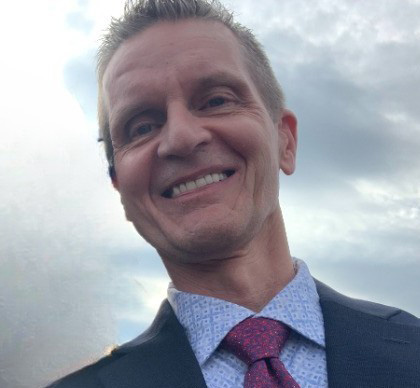
Candidate for Ward 3 City Councilor: Christopher Park
By Ellen Putnam
Hear Christopher say his name.

Photo From Christopher Park
Christopher Park is running for Ward 3 City Councilor because, he said, “I’m in a place where I want to give back to the community, and this is my way of giving back.”
“This seems like a very natural extension of what I am already currently doing,” Park explained. “And a natural progression from how active in the community I already am.”
Park has been active in the recent override campaigns: the successful override in 2019 and the unsuccessful one in 2024, and he is currently the “Yes! For Melrose” campaign’s co-captain for Ward 3.
He has been involved in local advocacy, including changing the Vinton Street and West Emerson Street intersection from a two-way stop to a four-way stop. “I wrote many letters,” he said, “I worked with the Ped-Bike Committee to come up with ideas, and I made some sketches of my own. Fortunately, it passed the City Council unanimously, and the intersection is much better now than it was.”
Park also advocated for reducing the size of the apartment complex that is currently being constructed at 14-24 Tremont Street. “I wanted to make sure that the development would be in the best interest of the surrounding neighborhood, in terms of footprint, size, and green space, and it wouldn’t be a blight on the community as a 5½ story building.”
Park is also active with Melrose Youth Hockey and Follow Your Art, and is an annual Porchfest host. “These are some of the ways I stay connected with the community,” he said. “It’s important for a City Councilor to be actively involved in Melrose and to meet with residents regularly.”
Park has a graduate degree in Computer Science and has worked as both an analyst and a developer. “I’m very experienced in terms of working with and breaking down numbers and budgets,” he explained.
He has worked in several roles where he was responsible for “communicating with both the business and development side, making sure they understood each other, and managing expectations from both - making sure the business side understood the limitations of the software and the technical side understood the values of the business.” He anticipates that this work in bridging communication gaps will be directly relevant to work on the City Council.
Park also noted that, when he lived in a condominium in Cambridge, he served the board of his building of over 100 units. “I lived there for 12 years, and I served as the president of the board for seven,” he said, “and during my tenure on the condo board, we only raised fees three times - I think that’s a testament to how I was able to successfully budget and manage the building.”
“I don’t think there are necessarily a specific set of qualifications for serving on the City Council,” he added, “What matters is loving your community, doing the footwork, researching what you don’t yet know, communicating clearly — and listening. And you must be able to include community input in your decision-making process. As I see it, those are the biggest qualities you need to be successful.”
“You have to be honest with constituents,” Park went on. “It’s not about taking the popular or safe position - it’s about doing what’s right and fair and helping people understand your perspective.”
“In a democracy,” he continued, “it’s just as important to respect the minority as it is to respect the majority, and I think that in our country as a whole we’re losing that. I want to make sure that all voices are heard within Ward 3 and within Melrose.”
“Fiscal responsibility is a core issue,” Park added. “I want to make sure we're spending within our budget and that our money is being spent responsibly. I’m very data-driven, based on my work experience as an analyst and developer - a lot of how I formulate my decisions and opinions is based on data and statistics.”
“And I’m focused on community engagement,” he went on. “I plan to make sure my website is updated with my blog posts - to make sure that I am as transparent as possible. If elected, I plan to hold regular office hours. I think our State Representative Kate Lipper-Garabedian does a great job with this - I get a newsletter from her, she posts when she’s meeting with constituents, either in different places in the community or virtually - and I’d love to follow that example in Ward 3.”
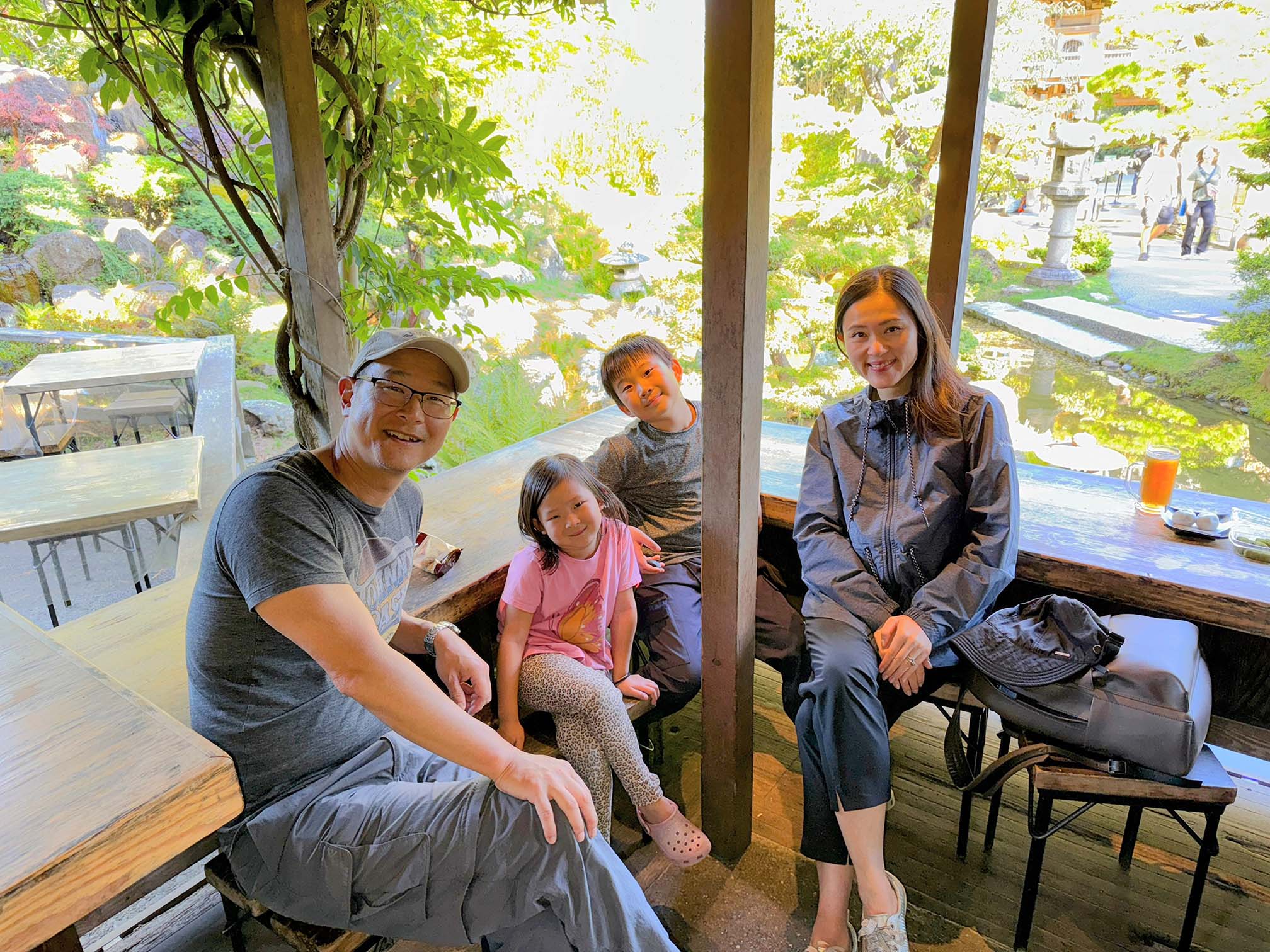
Photo From Christopher Park
“One of the reasons I’m running is because I see Melrose’s residents really rising to the challenges we face,” Park said, “taking the initiative, and doing what it takes when there’s a shortcoming in terms of budget or resources. That’s inspiring to me and I want to follow that path and do my part.”
He noted that, at the Lincoln Elementary School alone, parents have recently started a bike bus and the Girls on the Run program to help strengthen the community and provide more opportunities for kids. “I see all these wonderful things that parents and teachers are doing, going above and beyond, and I think this is why Melrose is so successful despite our financial challenges.”
“Our biggest challenge,” he added, “is making sure that we’re all on the same page in terms of factual knowledge and what the city can provide and the resources that are available. Right now, I see a lot of mistrust - people thinking the city is spending money irresponsibly or the administration is incompetent. Neither of these is true. Sure, every local government can do a better job in terms of improving their fiscal management, but I’ve looked at the numbers, and we are doing the best we can with the money that we have.”
“One of the things that I would like to make sure that people understand is what the city’s responsibilities and rules are,” Park went on. “They are obligated by state laws and regulations to spend on certain things. And I want residents to know where they can go for more information about the budget. The city government has recently updated the website, and that’s a step in the right direction - we need to make sure people understand what we are doing and how we got where we are. If we can’t agree that 1+1 is 2, then we can’t really have an informed discussion.”
“As a city,” he continued, “we’re broke. Unfortunately, that is the reality of the situation. In this particular case, the way to address that is actually simple: throwing money at the problem will actually solve a lot of things. We’re not looking to build a new stadium or add a new wing to the high school - we’re looking to keep and retain teachers at the schools, keep trash barrels in the parks, keep law enforcement officers on the streets, keep the library open on Sundays.”
“But in order to do that,” Park said, “we have to change the narrative that we’re not being efficient with our money. An override is a healthy thing for the city, and it needs to happen on a recurring and regular basis. Proposition 2½ was born out of the inflation rates in the late 70s and 80s - a 2.5% increase for city revenue was a way to regulate spending at that time, but it was never meant to be a permanent cap. Somehow, the narrative got changed along the way, and now residents think that if you’re not adhering to the 2.5% cap, you’re being inefficient. The 2.5% increase shouldn't be the benchmark on whether you are being efficient with city spending.”
“We have Yes! for Melrose right now,” he went on, “and I think that needs to be in place permanently. We need to make sure that all residents know how healthy our city is from a financial standpoint, and why overrides are important to maintain our city.”
As part of the override campaign, Park supports a “Yes” vote on all three override questions. “I’m glad the mayor put the override on November's ballot,” he said. “Three separate questions do add a layer of complexity, but it’s our job as campaigners to make the case and guide residents through the process on how to vote.”

Photo From Christopher Park
Aside from the city’s finances, Park noted that Ward 3 residents are overwhelmingly concerned with “public safety and city infrastructure - speeding and potholes. That’s tied to finance, of course,” he noted, “We’re strapped in terms of what we can do to fix some of these issues. But the DPW does a tremendous job in fixing potholes - they’re prompt with their service. A lot of people are unaware there’s a form on the city’s website - that’s part of the communication transparency that we’re lacking.”
“One councilor used to walk all the streets of the ward on a regular basis, and would take notes about potholes, and take note of which streets were in dire need of repaving - I think that's a great idea and soemthing I look forward to reinstituting in my ward,” he added.
“There’s also speeding,” he went on, “and I think that’s an issue across the city. There are a variety of ways that law enforcement have tried to curb speeding - they’ve brought things to the traffic commission, they’ve installed signs and radar signs, they’ve stationed law enforcement on the streets. But maybe we need to rethink whether there are more creative ways to curb speeding. I used to live in Cambridge, and I know they came up with all sorts of interesting ways to reduce speeding, such as changing the pattern on streets, putting artwork in the intersections - drivers are naturally inclined to slow down when they see a different pattern.”
When it comes to the work of legislating as a city councilor, Park described what his approach would be. “First, I would gather as much information as possible - from department heads, from people working on the issue. I’d also do my own research as to what proposals are, talk to constituents, and try to get ideas from different points-of-view, making sure that what I get is not just from one specific narrative. The question I would ask myself before voting is: does this improve the quality of life for residents and align with our community’s values and priorities? Then, after I voted, I would communicate my vote to constituents on my website and in my newsletter.”
Looking at the votes that City Council took this session, Park noted that he strongly agreed with the Council’s decision to reject a controversial proposal to eliminate the budget for Memorial Hall. “I just don’t think it was thought through very well,” he reflected, “and the magnitude and repercussions of what might happen if that passed would have been significant. I think people sometimes forget about the whole economy that comes with events at Memorial Hall - people going out to eat before or for drinks after. Even if Memorial Hall is losing money, it’s also supporting a number of businesses around there that benefit from events that take place there - I believe more than 150 were already scheduled for 2026 at the time of the proposal. What would happen if they were abruptly canceled? I’m glad that cooler heads prevailed on that vote.”
Park and his wife have two children. Outside of his advocacy and involvement in the community, he is an avid runner - “I run with a group of friends here on an almost weekly basis,” he said - a pianist, and an avid motorcycle rider - he taught motorcycle riding and safety in Cambridge for years.