The Battle of Bunker Hill 250th Commemoration
From the Melrose Historical Commission
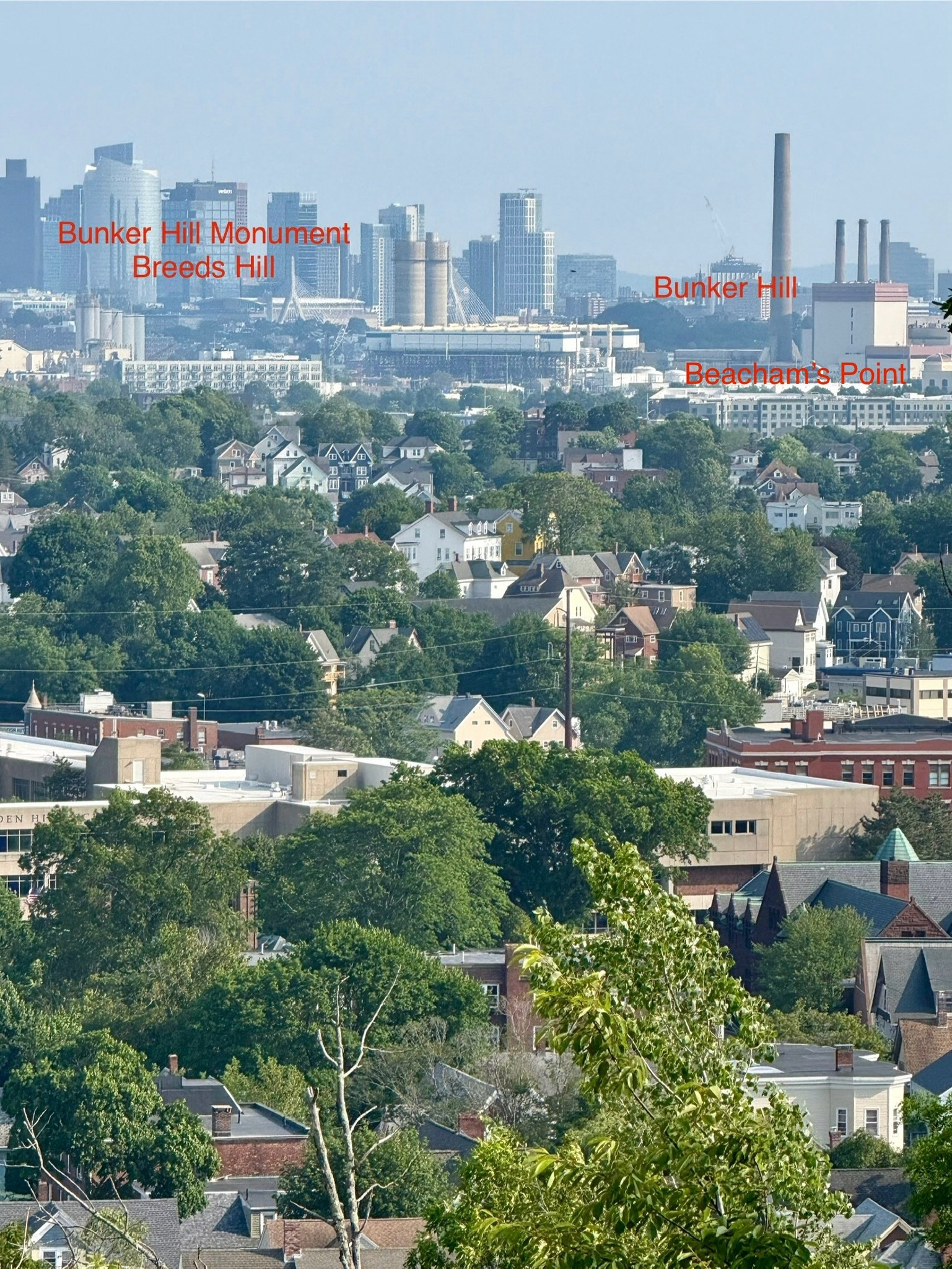
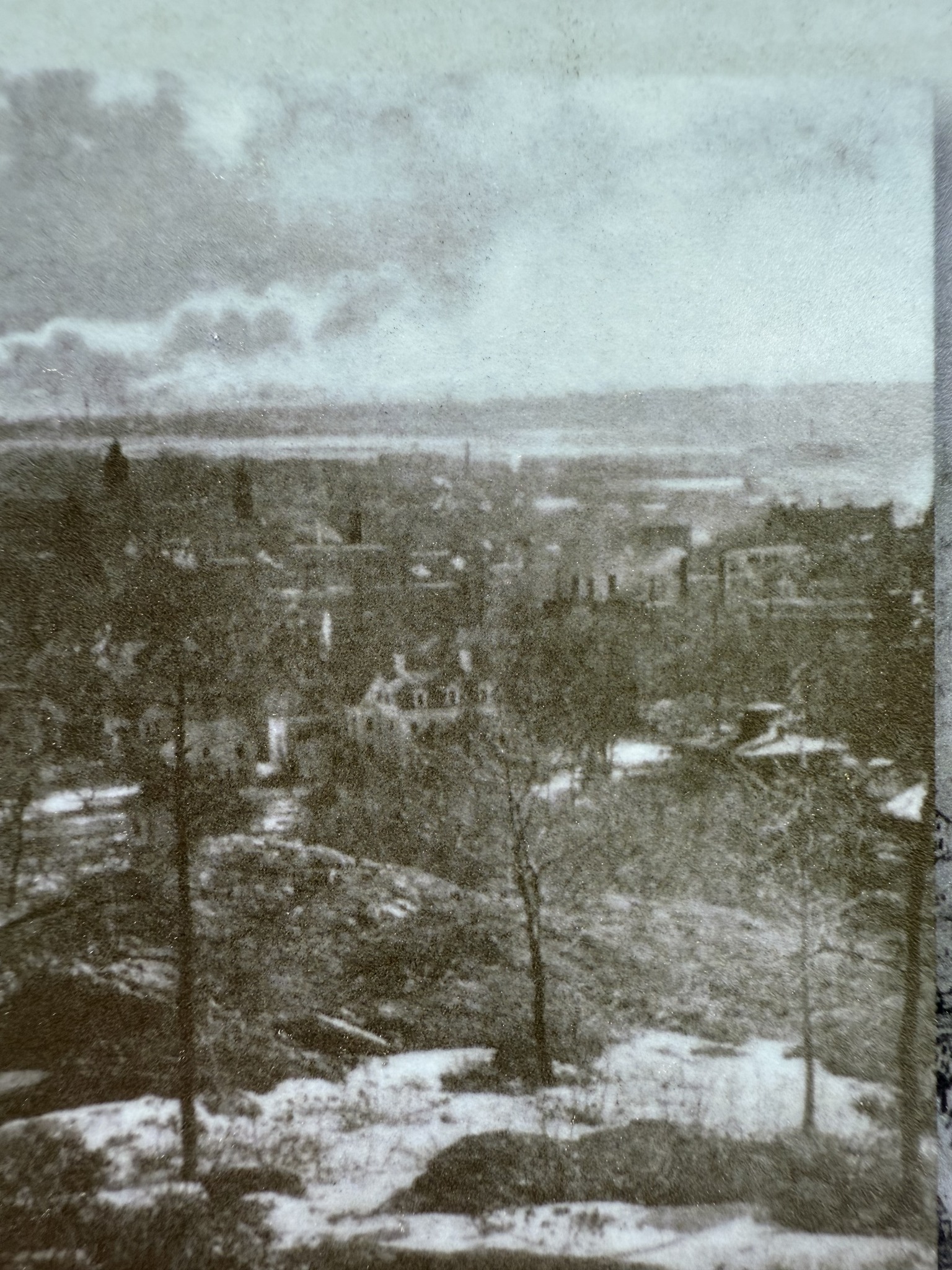
The view today from Waitt’s Mount looking toward Charlestown, and the same view from Waitt's Mount 125 years ago showing a much clearer sight line across the Mystic River.
Melrose just celebrated its 175th anniversary of separating from Malden. But long before that, the land comprising today’s Melrose was part of Charlestown from its establishment in 1628 until Malden was set off from Charlestown in 1649. The territory on the Melrose side of the Mystic River was first explored by Governor Winthrop in 1630. In 1640 the penny ferry was established that encouraged trade and settlement on the north shore of the Mystic River. The penny ferry and the busy Beacham’s Point wharf (near the power plant across the street from the Encore casino) were vital for communication and trade between Mystic Side and Boston and Charlestown. During the Lexington Alarm in April 1775, North Malden (Melrose) militia men had been among those who rushed to secure these areas.
After the colonial militia chased the Red Coats back to Charlestown on April 17th, 250 years ago, British General Gage retreated to the Boston peninsula. British troops laid siege to the citizens of Boston. During the two months leading up to the Battle of Bunker Hill military tensions were punctuated by skirmishes such as the May 27th Battle of Chelsea Creek during which militiamen from Malden and surrounding towns north of Boston were sent to the islands of Chelsea Creek (now largely composing East Boston and Logan Airport) to remove livestock to deprive the British from gaining access to these supplies. This series of skirmishes was referred to at the time as the Events at Noddle and Hogg Islands. Capt. Blaney’s company of militia from Malden including many of the same North Malden patriots who answered the Lexington Alarm on April 17th participated in these skirmishes, successfully denying the British fodder, livestock and supplies.
During the 11-month siege of Boston, more than 10,000 colonists would flee the shortages and martial rule in Boston, mostly patriot families, to the outlying towns. Meanwhile some loyalist families moved into Boston to be under the protection of the British troops. Colonial militia controlled the territory surrounding the Boston Peninsula, the Charlestown peninsula was a no-man’s land, and the harbor and shipping was under the control of the British Navy, although their ability to resupply was hindered by privateers and the unwillingness of coastal New England towns to supply the British after The Battle of Lexington and Concord.
Meanwhile in Philadelphia the Second Continental Congress responded to the Battle of Lexington and Concord by passing a resolution forming the Continental Army on June 14, 1775 to coordinate the military responses of the 13 colonies against the British threat. The 22,000 local patriot militiamen already besieging Boston were incorporated into this force. General Washington was placed in charge and immediately set off by horse for Cambridge to take command.
Hearing rumors that the British planned to seize the strategic positions of Dorchester Heights and the hills of Charlestown, plans were made overnight on June 16,1775 to send militia to build a redoubt on Bunker Hill. Charlestown was mostly deserted so in the confusion and dark of the night the militia dug in on Breed’s Hill instead. Daybreak found the patriots’ earthworks to be much closer than they intended to the Copp’s Hill fortifications across Boston Harbor and much nearer to the canons of the Royal Navy ships below. The British attacked. Although the patriot militiamen fought valiantly, a lack of ammunition contributed to their defeat, overcome by the third wave of British Red Coats.
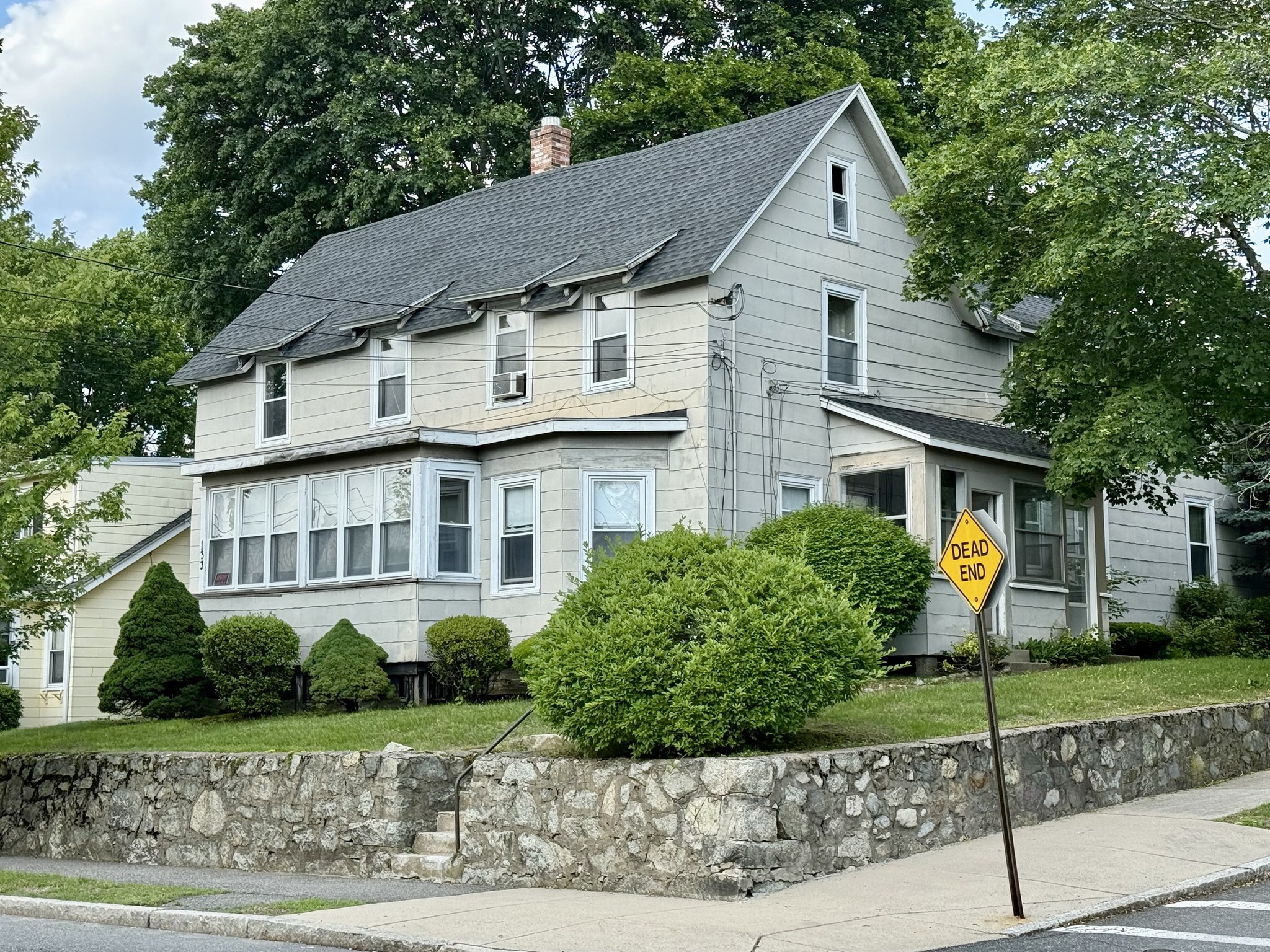
The original Phineas Upham home that Amos Upham owned during the Revolutionary War was built in 1703 near the corner of Highview and Upham Street. In the mid-19thc. it was moved and completely reconstructed on Waverly Street. (The Phineas Upham House museum on Upham Street was built approximately 1720 as the home for Amos and William's father, Amos Upham Sr.)
The sound of the cannons echoed across the Mystic River throughout North Malden. In the home of Samuel Green, located on what is now the 6th fairway of Bellevue Golf Course, Samuel’s wife Hannah reportedly went into convulsions and died of fright. Fear would have gripped many as the battle roared on across the Mystic. Many Malden families took to the roads with their children and possessions heading northward through present day Melrose, seeking safety in the sparsely settled Scadan area (the area between Maplewood, Lebanon St. and Mt Hood). While some sought to distance themselves from the fighting, many residents of North Malden climbed Waitt’s Mount just south of Pine Banks Park to watch the battle. Even today the summit of this park provides a clear view of the Bunker Hill monument.
Many of the same North Malden patriots who marched with Captains Blaney and Hatch to cover the Lexington retreat in April, joined their company to defend Beacham’s Point just across the Mystic River from the battle, including Phineas Sprague of Foster St. who dug a 9-pound shell out of the riverbank fired from a British warship in his direction as a souvenir. William Upham and his brother Amos, grandsons of one of the earliest settlers Phineas Upham, served under Blaney during the Battle of Bunker Hill and William was still fighting with Washington’s forces at the Battle of White Plains in October 1776 where he was disabled for life. Following the battle wounded men were brought to Dr Jonathan Porter’s tavern near Waitt’s Mount for treatment. Porter’s Tavern was a competitor to the Rising Eagle Tavern in Malden, which apparently did not offer medical services.
During the Battle of Bunker Hill, the Continental Army suffered 450 dead and wounded but the British suffered over 1000. General Washington would arrive in Cambridge on July 2, 1775, to take command and would remain here until the Siege of Boston ended in March of 1776 after Henry Knox’s successful daring winter expedition to retrieve Fort Ticonderoga’s cannon and install them atop Dorchester Heights.
Follow the Melrose Historical Commission on Facebook and on Instagram to see their latest content.