Outdoor Preschool At Pine Banks Park Enters Fifth Year
By Ellen Putnam
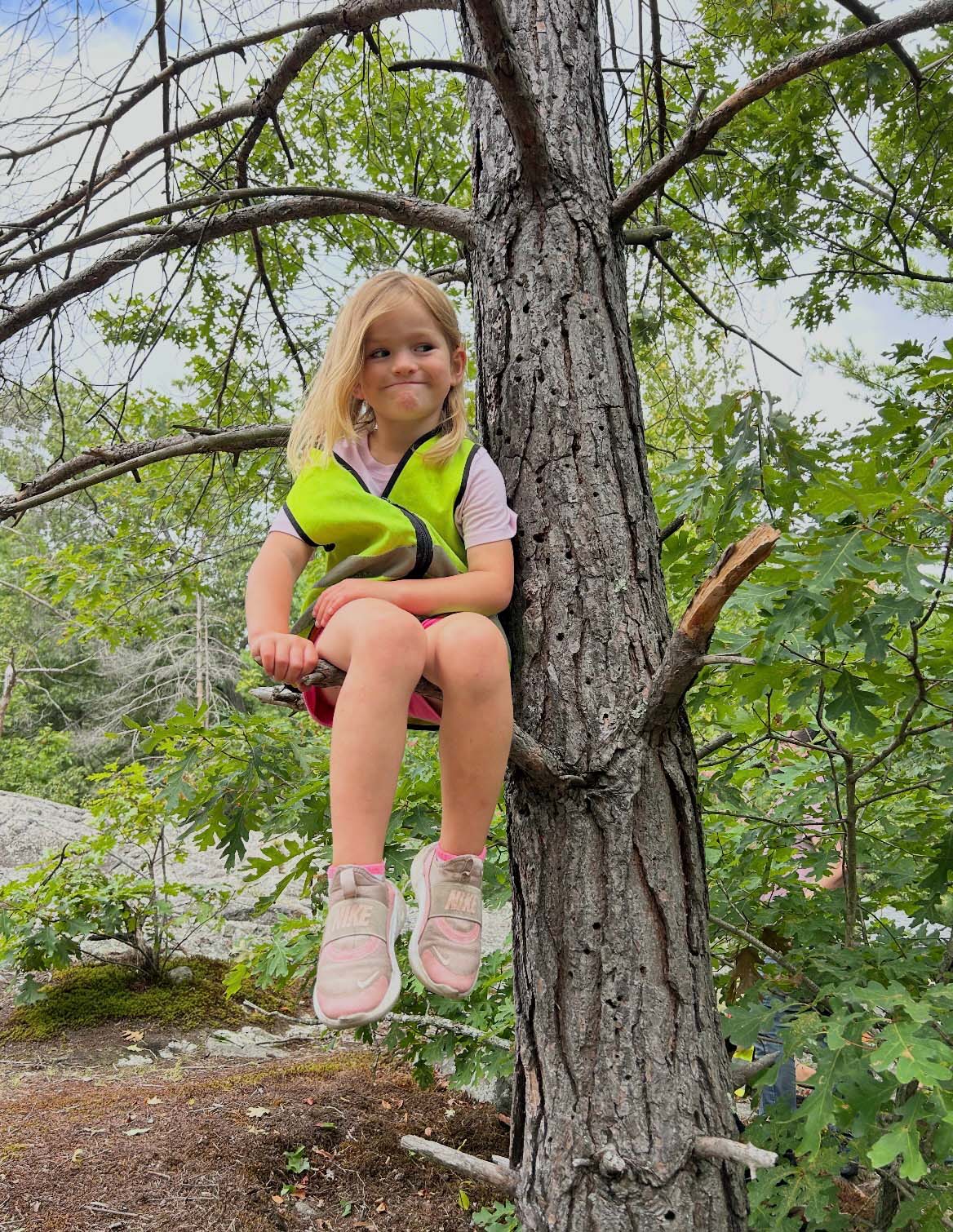
Photo From Teri Torchia
Most weekday mornings, preschoolers in bright yellow vests can be seen trooping around Pine Banks Park - and that sight will become even more common in the fall as Boston Outdoor Preschool Network (BOPN), now entering its fifth year in Malden and Melrose, opens a third class at the Pine Banks site.
BOPN, which was founded eight years ago at the Arnold Arboretum in Jamaica Plain, has programs throughout the Greater Boston area. It offers two-, three- and five-day programs for children ages 2 to 6 during the school year, as well as a playgroup in the fall and spring for younger children and their caregivers, and summer programs.
Currently, the Pine Banks site offers only half-day programs, although site director Teri Torchia noted that, if an indoor space near the site can be made available for bad-weather days, full-day programs could be offered in the future.
Children in the school year programs spend each day outside from 9am to 12pm, including during the winter. While classes are sometimes canceled for snowstorms or dangerous conditions, such as high wind or thunderstorms, children still go outside on cold and rainy days.
“There’s a Norwegian expression:” said Torchia, “‘There is no bad weather, only inappropriate clothing.’ Kids adapt well to the weather. We had one child who didn’t want to wear their raincoat at the beginning of the year when it was cold and rainy. One day, they got really cold - and after that, they always wore their raincoat. The kids figure it out.”
(Author note: My child has attended BOPN for three years, and while we have had some battles over wearing weather-appropriate clothing, I have very rarely picked up a truly cold and miserable child from school.)
While outdoor education is becoming increasingly popular in the United States, with preschool, elementary, and homeschool programs appearing in many places, BOPN is the only program in our immediate area that offers outdoor preschool. (Other programs can be found at Wright-Locke Farm in Winchester, and at Mass Audubon’s Drumlin Farm and the Birches School in Lincoln, as well as at BOPN’s other sites at the Arnold Arboretum and in Milton.)
“Research shows so many benefits from outdoor learning and being immersed in nature,” Torchia said. “It helps with children’s physical development because they are navigating difficult terrain, climbing hills, and exploring mud, water, and sand. It’s great for their socio-emotional development. Being outside and being able to lead their own learning and play helps children develop problem-solving skills. They learn to cooperate and collaborate with others, and they develop creative thinking, imagination, independence, and confidence.”
“And the children leave with a deep awareness of our natural world,” she added. “Research shows that kids who have an outdoor experience like BOPN are more likely to grow up and be good stewards of the Earth.”
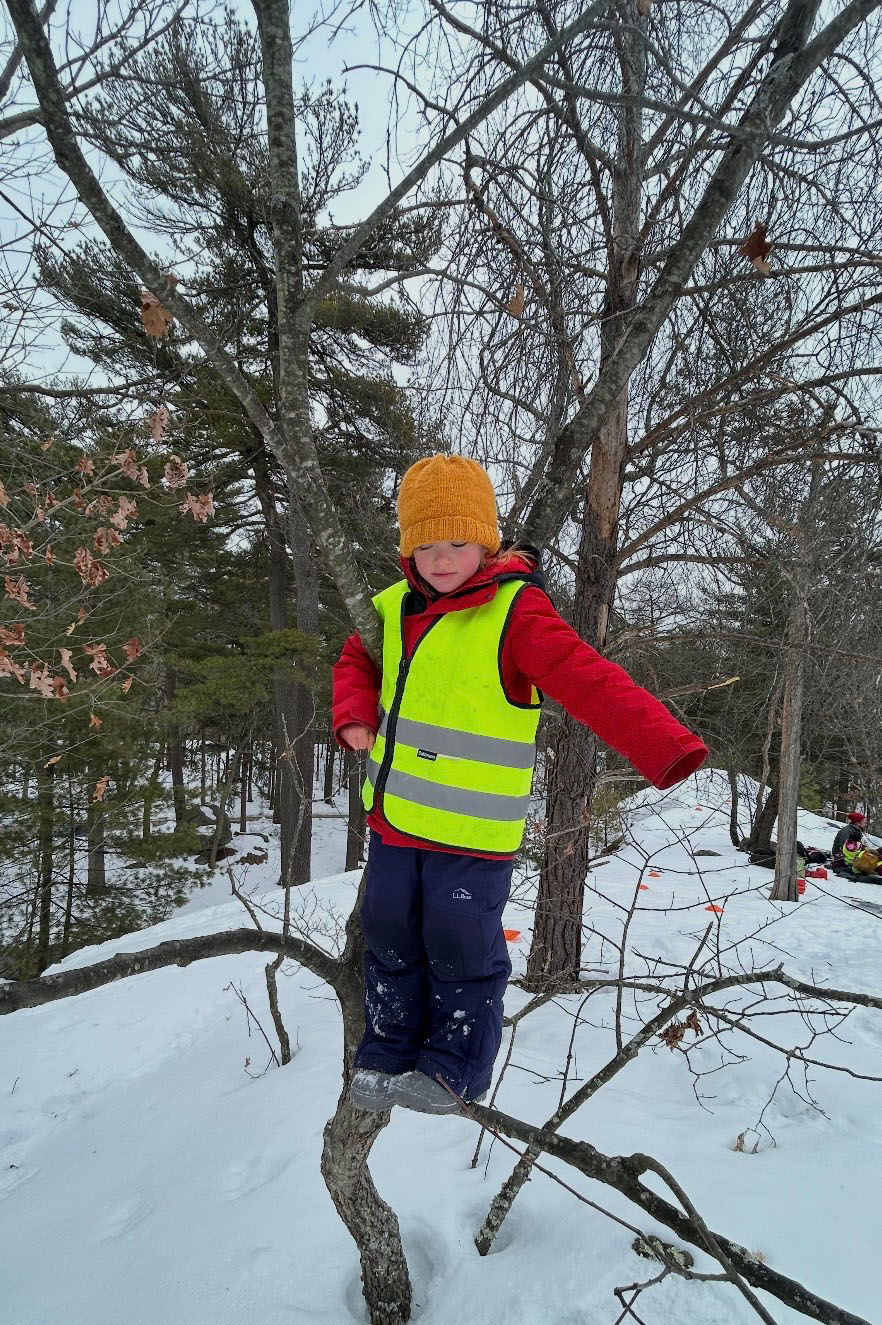
Photo From Teri Torchia
Matteo Bon Tempo, Torchia’s co-teacher, shared that, in his view, the greatest advantage that BOPN offers children is choice.
“Kids get to choose what they want to do and when they want to do it,” he said. “We’re not completely lacking in structure, but what BOPN offers kids is the ability to explore and make choices at their own pace, which is not something that kids are usually empowered to do. They have the choice to engage with what they want and practice skills they feel like practicing. It’s very dynamic.”
It is that child-led approach that makes for some special moments at BOPN. Children might watch ducks or a great blue heron in the pond, or try to catch tadpoles, or create a fort out of tree branches. Or they might choose to draw or sit and listen to a book. Each day, the children - including the youngest classes - hike together to adventure spots with whimsical names like Salamander Valley and Log Lookout. Children engage in risky play (which experts say is essential to child development) like climbing rocks and trees while under the watchful eyes of the teachers.
While some children who attend the program come from families who already spend lots of time in the outdoors, some are more reluctant at first. “BOPN builds resilience,” Torchia said. “Most children are already drawn to nature. Sometimes there might be a few who aren’t, but they do easily and quickly embrace it and adapt.”
The program is made possible by ongoing collaboration between BOPN and Pine Banks Park, which is jointly administered by the cities of Malden and Melrose.
BOPN has grown in popularity in the almost five years since it started at Pine Banks. There is often a waitlist, although there are currently still a few openings for both summer and school-year classes. And while most of the families come from Melrose, Malden, or Medford, some come from farther afield.
“It’s just so good for them,” said Torchia. “This is what kids are built for: to be outside, to play, to explore, and to problem-solve. Every day, I pinch myself and say, ‘this is my classroom!’”