City Council Clashes Over Free Cash Requests
By Ellen Putnam
Screenshot from MMTV
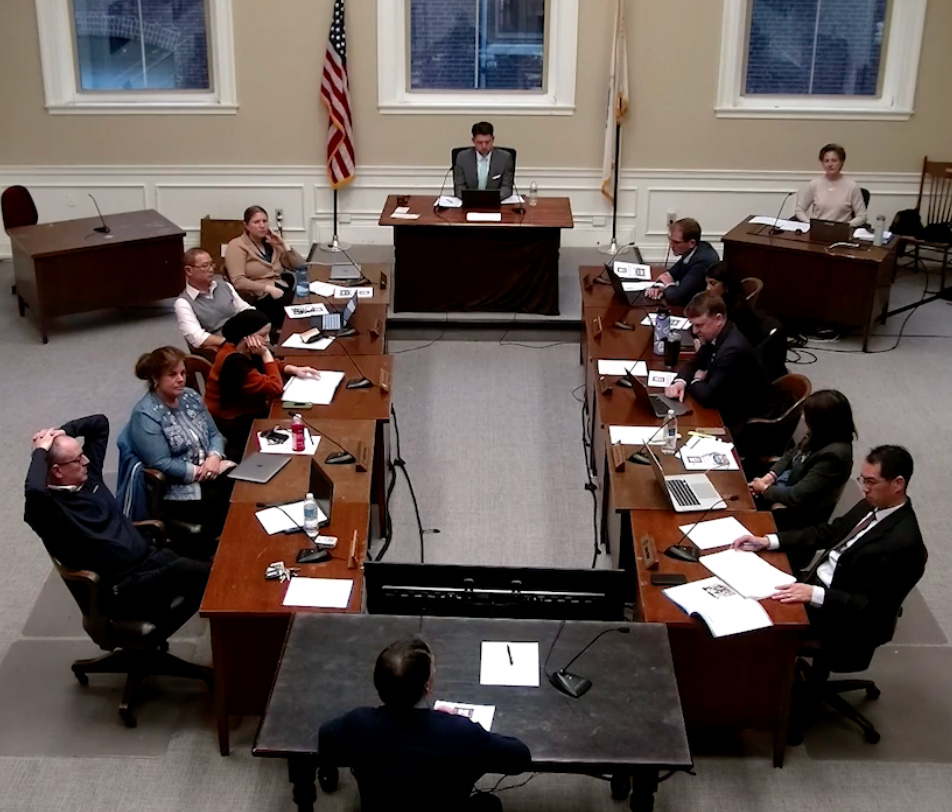
At Thursday evening’s lengthy budget hearing, the City Council voted quickly to approve a number of department budgets, while a few free cash items became unusually contentious.
The meeting, which contained a whopping 32 agenda items in addition to public hearings on the budget and on water and sewer rates, lasted for nearly six-and-a-half hours, until 12:30 am. It was largely uncontentious, with relatively little discussion of most of the city departments that presented their budgets.
But four of the seven proposed free cash items generated more discussion.
Free cash is what is left over from the previous year’s budget, and is recommended for one-time expenditures. The state’s Division of Local Services recommends that municipalities aim to generate 3-5% of their total budget in free cash.
Melrose has $5.5 million in free cash left over from last year’s budget, which became available for spending earlier this spring and must be appropriated before the end of this fiscal year on June 30th. Mayor Jen Grigoraitis has proposed 26 free cash expenditures, ranging in size from $3,000 for a census mailer inclusion to $710,000 for Ell Pond Park design, which was this week’s most hotly contested item.
Each free cash item must be voted on in the City Council’s Appropriations and Oversight Committee (which all city councilors sit on) and then receive final approval at a subsequent full City Council meeting. The City Council may vote to approve, reduce, or reject a free cash item, but cannot modify or add to it.
The City Council unanimously approved $400,000 in free cash for design for the Lebanon Street Transportation Improvement Project. The city has been awarded state funding for the project’s estimated $10 million in construction costs, but Melrose must pay for the design part of the project. The project will result in a full rebuilding of Lebanon Street from Grove Street to the Malden line, including addressing flooding and drainage problems, adding and improving sidewalks, and adding what will likely be a sidewalk-level cycle track.
They also approved $20,000 for school signage and $37,000 to clear Towners Pond of water lilies, which are beginning to overwhelm the pond and, residents noted during public comment, make it unusable for activities like fishing.
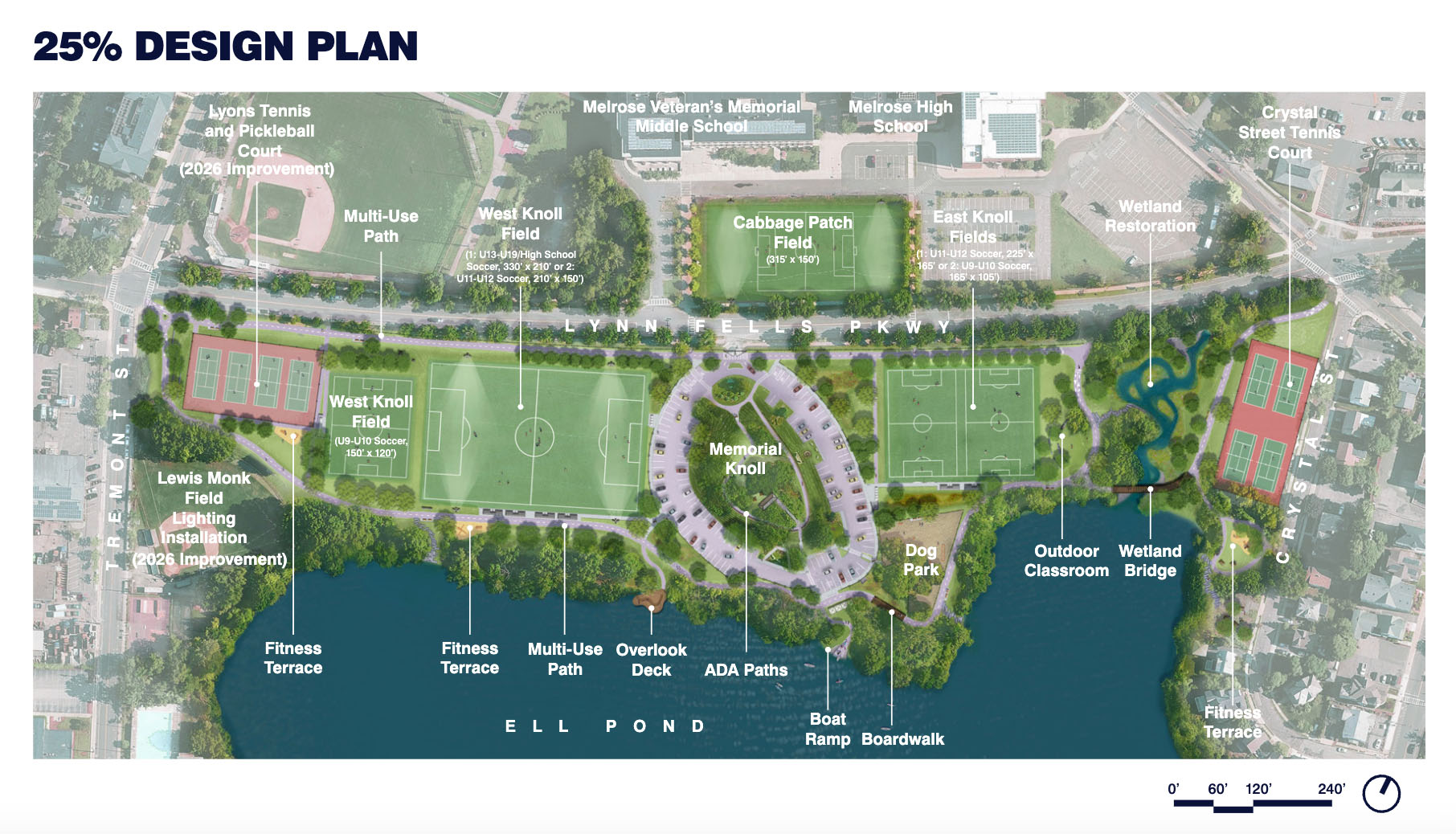
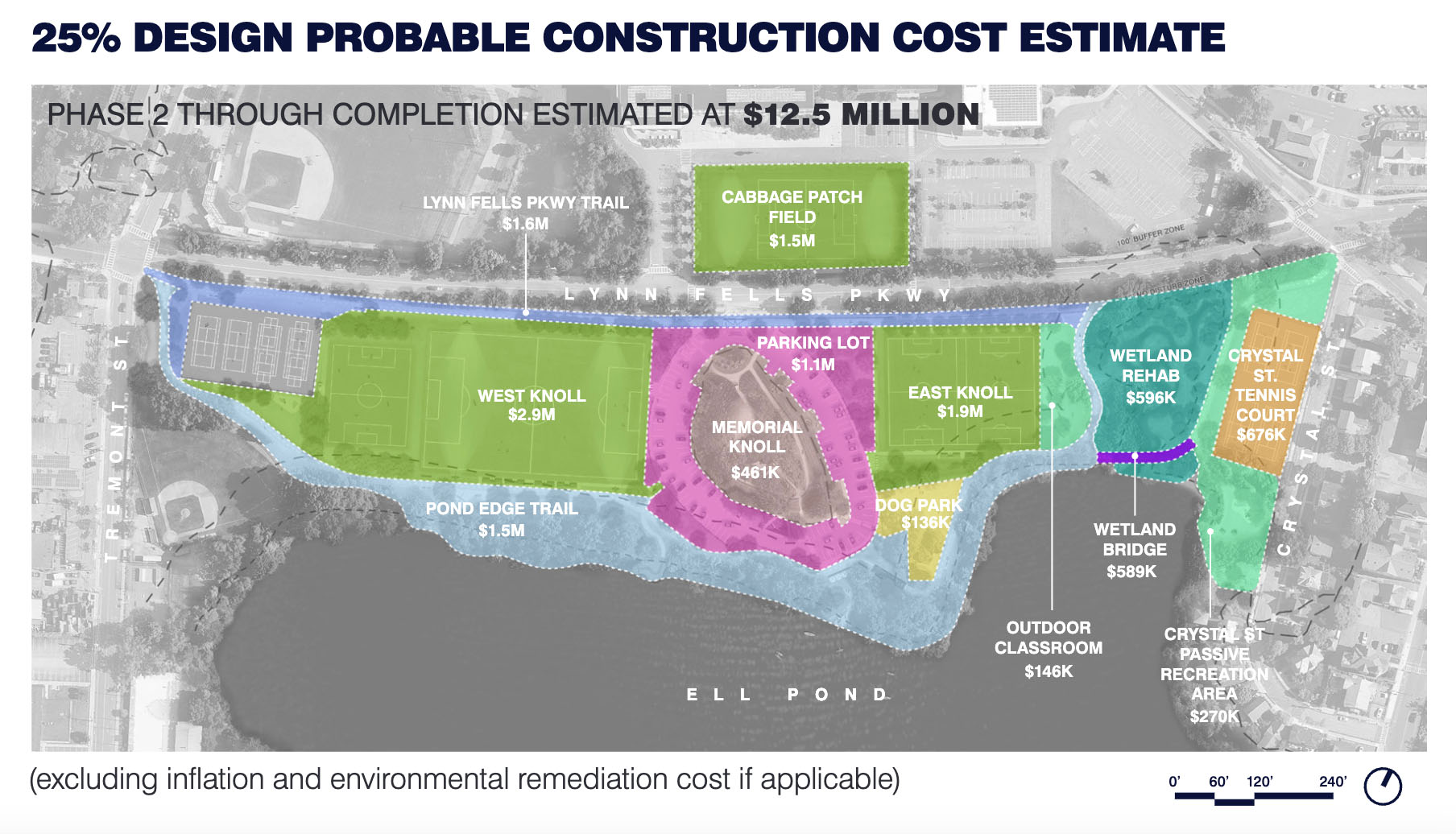
Plans for Ell Pond Park and corresponding cost of each item
Prepared by Weston and Sampson
The free cash item that generated the most discussion - over two hours’ worth - was $710,000 for Ell Pond Park design. The project is based on a feasibility study that was completed in 2022. (The most recent public engagement on the project was in November 2020.)
Last year, the city received a federal grant for $1 million for stormwater improvement at Ell Pond, and that project is expected to break ground next year.
The remainder of the project, which would involve renovating the West Knoll, East Knoll, and Cabbage Patch fields, along with adding a walking trail along the pond and making the memorials on the Knoll accessible, is estimated to cost an additional $12.5 million. While the city could be eligible for additional state or federal grants to cover some of that cost, there is no identified funding source at present.
“Our largest piece of open space is really just playing fields, because we haven’t been able to activate the other things around it,” said Mayor Jen Grigoraitis. “We have Mount Hood, and I think some people go up there, but when people really think about open space in Melrose, Ell Pond Park is what they think about. And right now, it’s largely a dog park, a parking lot for high school students, a memorial that people can’t get to if they’re not physically able to, and playing fields.”
“This is a huge project,” she acknowledged, “so do we continue to keep it sitting on a shelf? Or do we try to continue to move forward and make things better? It’s taking what we know is a deteriorating, well-used facility and trying to make it better and recognizing that hopefully we carry the ball a little bit further along, and then it gets picked up by whoever comes after us.”
The City Council received letters in support of the project from Melrose Public Schools, which makes use of the park for wellness classes and extracurricular athletics, and Melrose Youth Soccer and Melrose Youth Lacrosse. These letters expressed the need for more field space and better stormwater management to avoid games getting rained out due to flooding and soppy fields.
During public comment, multiple residents, including a representative from Zero Waste Melrose, spoke in favor of the design but in opposition to the potential use of artificial turf for one or more of the fields. They expressed concern about toxic materials in the turf; the difficulty of recycling it when it wears out within 5-10 years of installation; its tendency to get extremely hot; and the heightened risk of injuries on turf.
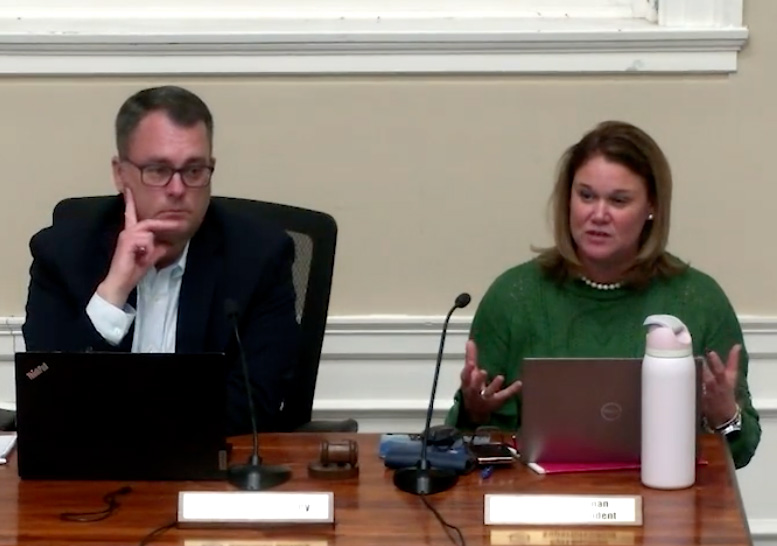
Ward 4 Councilor Brad Freeman, who previously served on the Park Commission, expressed his support for the project, noting that it would enhance outdoor and wellness education in Melrose schools; would offer better walking space for residents; and would provide more field space, allowing a wider range of athletic programs for all ages and skill levels to have field time.
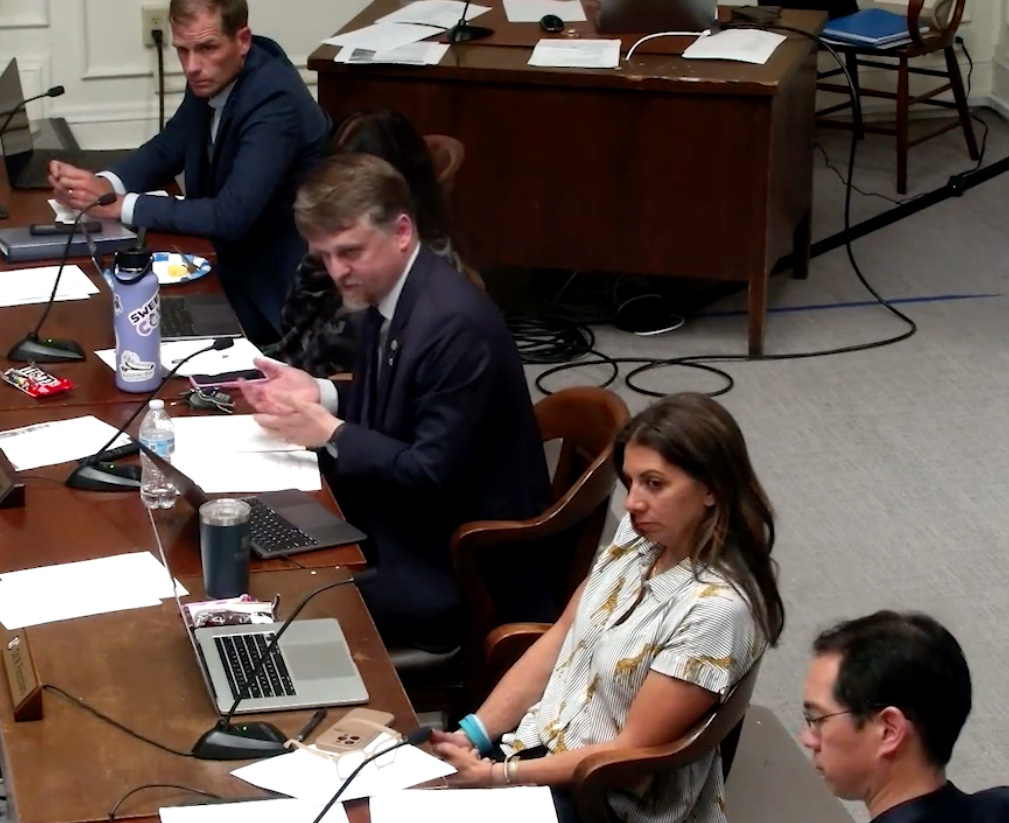
Screenshot from MMTV
Ward 6 Councilor Cal Finocchiaro said: “I grew up here, and I went to the old middle school that used to get flooded. The fields there have always been soppy wet and unplayable. I feel like this is our centerpiece, along with downtown Melrose. There are so many fields, it’s near the schools, it gets a lot of use, and I definitely would like to continue investing in the space.”
Other city councilors expressed reservations about the potential use of artificial turf, the uncertainty of further funding for the project, and what they saw as the lack of a firm commitment to going through a robust public process for the design.
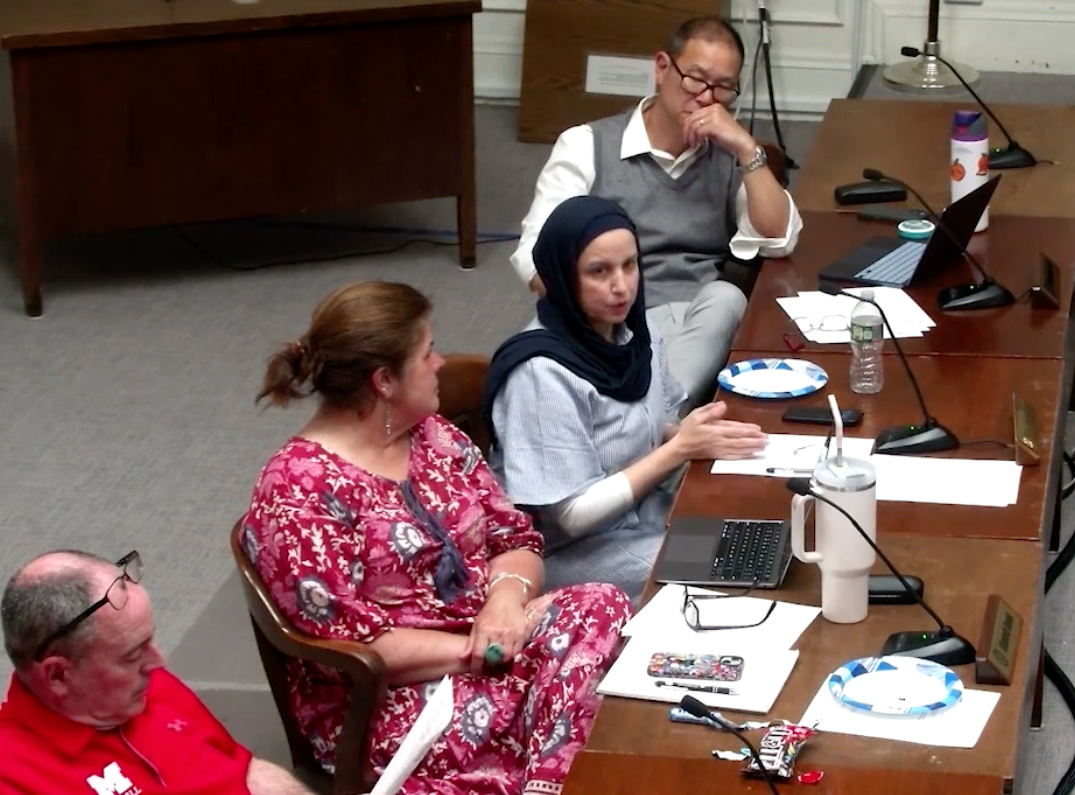
“I think we really need to talk about equity and access and what that means in terms of a process for design and whose voices are heard, and whose voices have been ignored in the past,” reflected Ward 1 Councilor Manjula Karamcheti, who noted that the design does not include a track. This means that the high school track teams (“which are some of the more diverse students in our district,” she noted) will continue to need to travel to Pine Banks Park for their practices, even if the Ell Pond Park renovations mean that other teams can practice closer to the schools.
Director of Public Works Elena Proakis Ellis noted that the general design of the project is already set as a result of the previous public process and cannot easily be changed at this point, but some things - such as the potential addition of a playground to the design or the question of whether to use artificial or natural turf on each field - could still be changed, and would be subject to discussion and vote by the Parks Commission.
“I love a lot about this,” added Councilor At Large Ryan Williams, who reiterated some of the concerns community members had shared about synthetic turf. “I love the walking paths. I love the wetlands restoration. I think that it’s moving in the right direction, with the exception of turf. I want to see it move forward, but I can’t vote for it without a guarantee that there won’t be synthetic turf in the design. I have very little faith, if we move this forward, that it will not reappear in 18 months as a fully synthetic turf project with a great justification attached to it for why a small group of people had to make that choice.”
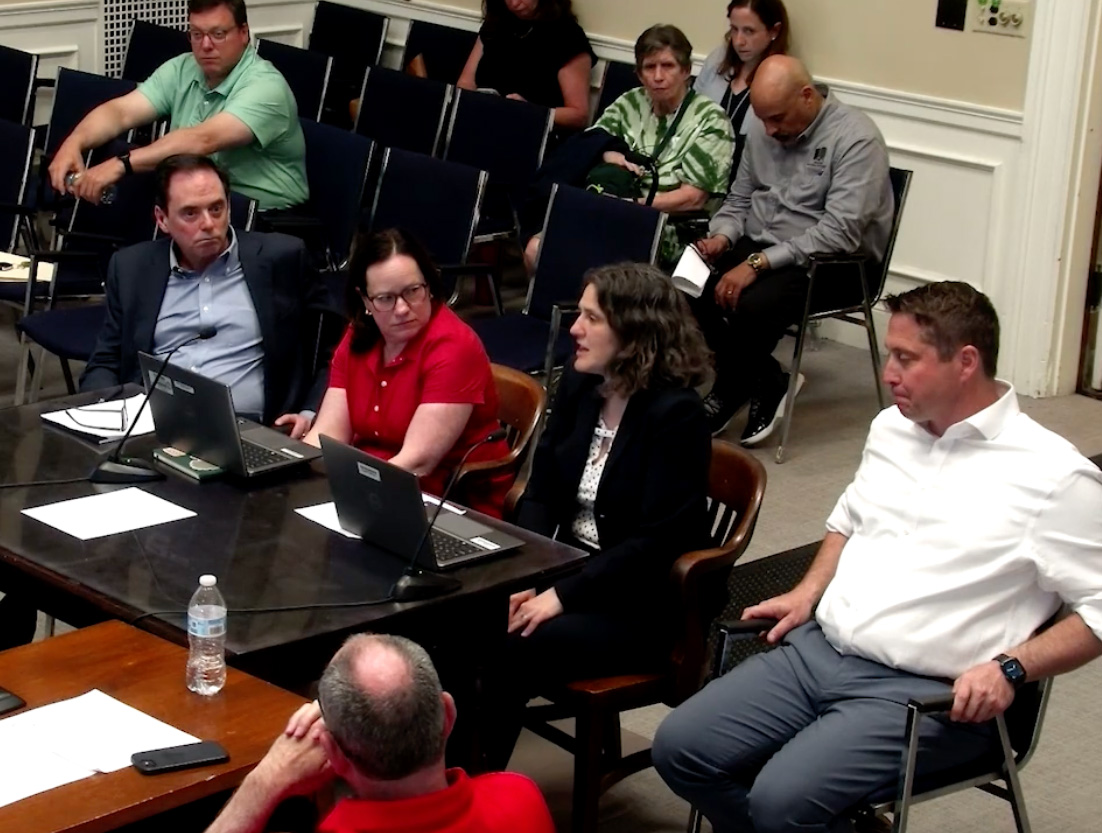
Screenshot from MMTV
Councilor At Large Elizabeth Kowal said, “I’m struggling with this one. I love most of the design. I am very strongly anti-turf. I want so badly to believe you that there is going to be this public forum, but I’m skeptical about it, having lived through some of the other decisions that sort of got rammed through. This is the largest amount in free cash that we’re giving out, and I’m struggling with that leap of faith that, without a plan in place to follow up, this money is not just going to disappear into the atmosphere, that we won’t be able to get federal funding, that we won’t be able to get more free cash or town money to do this.”
“I really appreciate the optimism and creativity in this, and going big,” added Councilor At Large Jason Chen. “But the worrier in me, and the frugal person says, ‘I don’t want to be sitting here two years from now with a 90% design of the whole thing, with a pathway to only fund a third of it.’”
“I love the design,” Ward 2 Councilor John Obremski said, “I love every aspect of it. And I think that the thing that’s holding some of my colleagues back is the idea of the artificial turf. What I’m hearing is that there has been no decision made yet on the artificial turf, and I trust in the process.”
“I have absolute trust in the administration and in the decisions that they make,” added Councilor At Large Maya Jamaleddine. “I do believe that it is time to invest in this project and support our kids in their sports and activities. But I want to make sure that when we’re sending them to do that, we’re not actually harming them with artificial turf.”
Ward 3 Councilor Christopher Park, who sat on the committee that developed this year’s Capital Improvement Plan, argued, “I don’t think it is productive to potentially hold back a design for something where you potentially agree with the vast majority of the benefits of the project, just because you might not necessarily get your way on the fields. If you truly believe that natural grass is the best way to do this, then rally your friends, rally the people that you think would support this, make it impossible for the Park Commission to go in another direction.”
Councilor Williams proposed an amendment to the free cash order that would exclude the use of the design funds on turf, but the city’s legal counsel determined the proposed amendment was not within the authority of the City Council to make. Ultimately, when the project came up for a final vote, only two councilors - Vandiver and Williams - voted against the expenditure, with the other nine - Chen, Finocchiaro, Freeman, Jamaleddine, Karamcheti, Kowal, Obremski, Park, and Romanul - voting to approve the $710,000 for the design and permitting of the project.
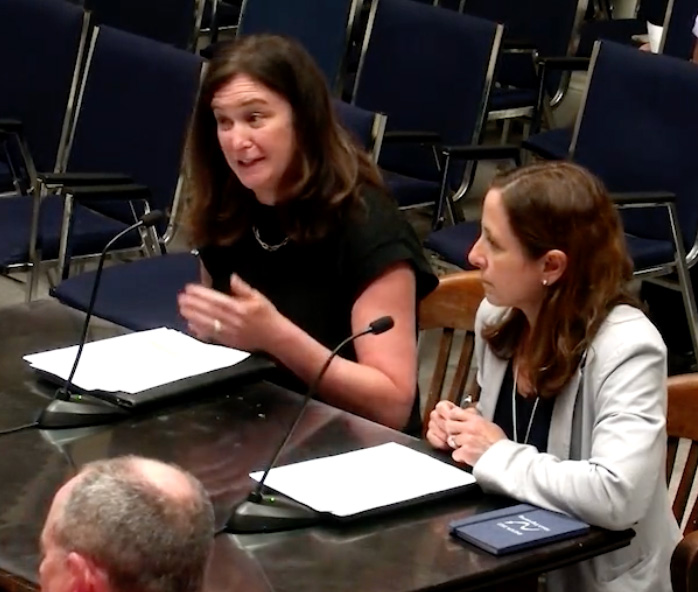
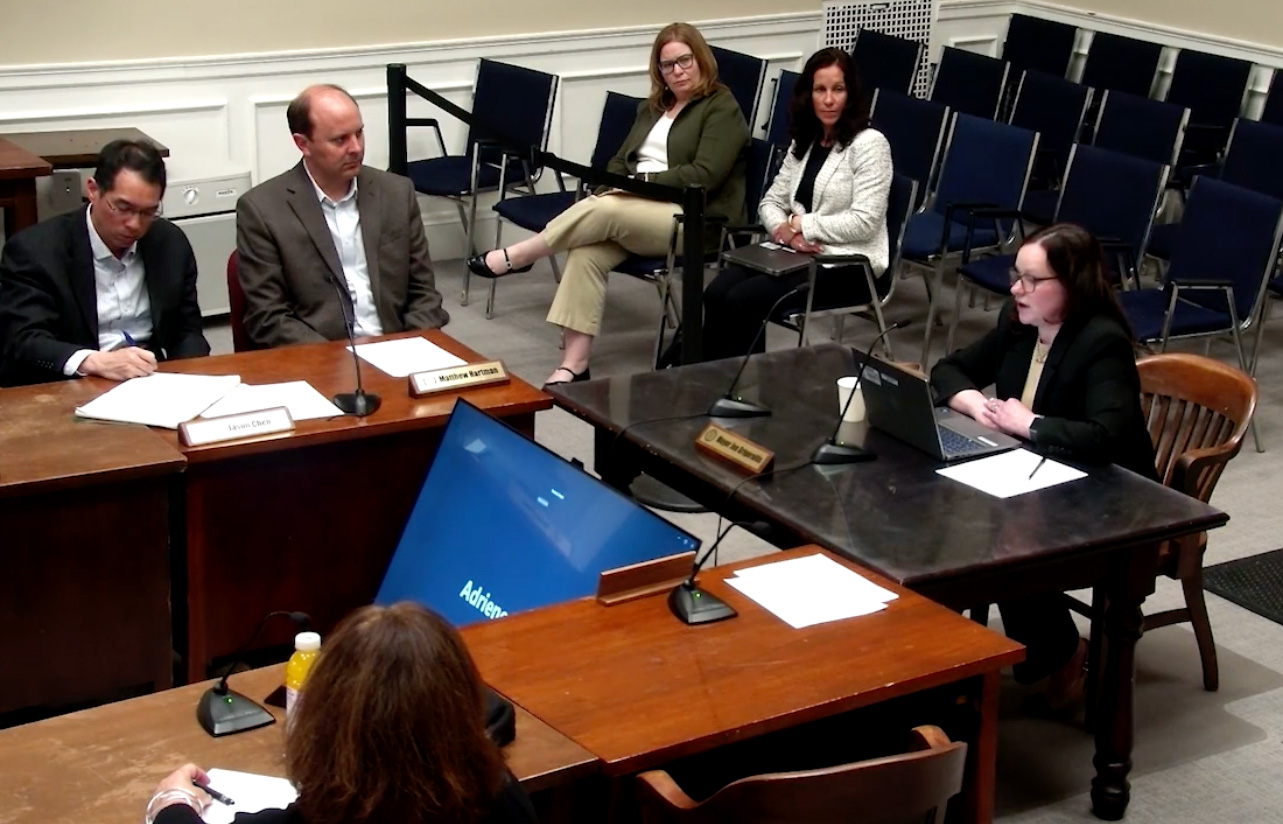
Amy Tierney, left, and Lori Massa
Screenshot from MMTV
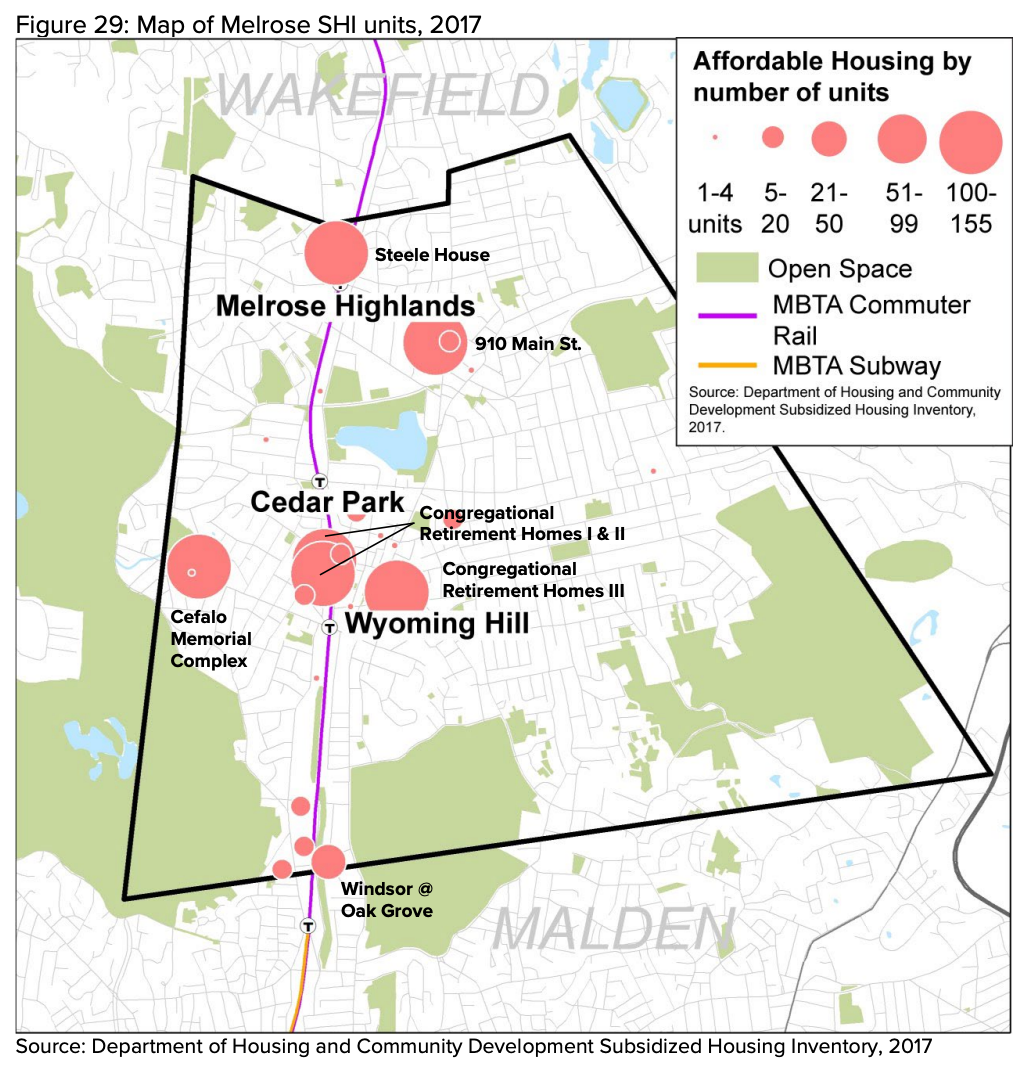
The City Council later discussed a proposed $150,000 appropriation to the Affordable Housing Trust Fund (AHTF), which was established in 2020 to support affordable housing development in Melrose. Municipalities that have passed the Community Preservation Act (CPA) often use those funds to support their Affordable Housing Trust Funds, but Melrose’s trust is funded largely by what developers pay into the fund when required to by inclusionary zoning rules. Last year, a request for $150,000 in free cash to support the AHTF was rejected by the City Council.
While much of the city’s discussion of affordable housing has been focused on large developments, which are required to include at least 15% affordable units, the AHTF offers a potential path to create more affordable housing on a smaller scale. The AHTF’s first major investment, last year, was to support the creation of three deed-restricted affordable units in a three-family house.
Martin Corona, the Executive Director of the Melrose Housing Authority, spoke during public comment in support of the AHTF, calling it “workforce housing” and noting that deed-restricted affordable housing is one way to make it possible for teachers and other city employees to live in Melrose.
Amy Tierney, the Chair of the AHTF, said, “We have a long-term plan, and we need to get more sustainable funding. This would help us leverage outside funding from state and federal, and honor the commitment Melrose has already made to its most cost-burdened residents. $150,000 is a small fraction of the city’s free cash, and frankly, I think it’s the kind of investment that the community expects from a city that has put affordable housing in its master plan, in its housing production plans, and created a trust in the first place. And I think it shows consistency between those stated values and our budget decisions - and I think we’ve shown that the Trust is ready to deploy the money. We can’t wait for a perfect solution, but we need to start somewhere, and this is the city putting some money into something that they have consistently said is a priority for us.”
From the Melrose Housing Production Plan
Councilor Jamaleddine expressed her support for the proposal, as did Councilor Karamcheti, who said, “Housing is probably the thing I spend a majority of my time on, and what I believe this trust can do is help us proactively move forward on projects that help us make Melrose more affordable. Because every day it seems like it’s getting less and less affordable.”
Councilor Chen expressed skepticism contributing relatively small amounts of money to AHTF would make a difference in the region’s affordable housing problem.
City Planner Lori Massa responded, “A lot of these things are signals to the market,” and noted that nonprofit developers, none of whom have yet invested in a project in Melrose, pay attention to the city’s trust and how much the city invests in it. “It gives us a little bit of an advantage to say, ‘Yes, we don’t have a lot of money, but we’re actively trying to increase the supply of affordable housing.’ This business is really tough, and it takes a lot of time and funding sources to piece these things together. So, in and of itself, it’s not a lot of money, but it does have implications in the development world.”
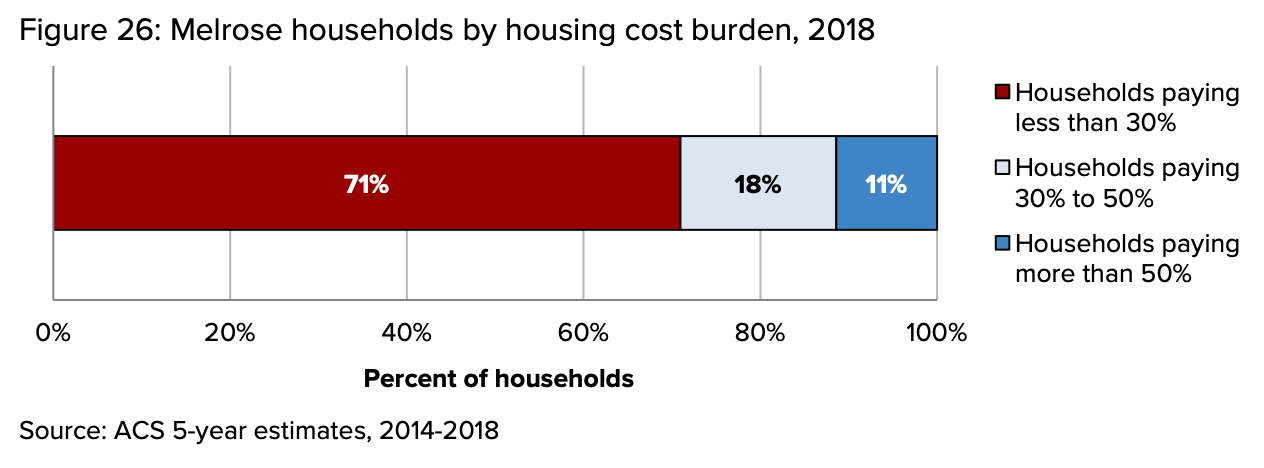
Councilor Finocchiaro expressed that she does not see Melrose as having a housing problem at present, pointing out that a number of large multifamily buildings are currently under development. Ward 5 Councilor Kim Vandiver responded that many Melrose residents are spending as much as a third to half of their income on housing, which can mean they struggle to pay their bills.
Ultimately, seven councilors - Freeman, Jamaleddine, Karamcheti, Obremski, Romanul, Vandiver, and Williams voted in favor of the spending and four - Chen, Finocchiaro, Kowal, and Park - voted against it. Because free cash appropriations require a two-thirds vote, or eight votes, to pass the full City Council, this means that, unless one of the councilors changes their vote before the next City Council meeting, the appropriation will not be approved.
Another free cash item dealing with housing production, $75,000 for consultants to update the city’s Housing Production Plan, which expires in April of next year, also generated discussion, although the final vote was unanimous in favor.
The city must have a state-approved Housing Production Plan in order to be eligible for temporary safe harbor status under state housing law Chapter 40B, which allows developers who will include 25% affordable units in a development to effectively bypass local zoning requirements. The Housing Production Plan identifies the city’s current housing needs, potential areas for growth, and specific sites that could be developed into housing.
From the Melrose Housing Production Plan
Some city councilors questioned the need to pay consultants for the work, while others noted that projects filed under Chapter 40B do not always reflect the city’s goals as laid out in the Housing Production Plan.
Councilor Vandiver expressed frustration that the City Council’s discussion of the Housing Production Plan appeared to be largely focused on its role in avoiding unwanted 40B projects. “The goal of this plan is not only to prevent 40B projects,” she said. “The goal of this plan is to recognize the fact that we do have a very serious housing crisis, and we need to think constructively about where we would like housing to go. The goal is not to build only as many houses as are defined in the plan. It’s not a housing prevention plan. So I find this discussion really concerning, especially in light of the fact that we just, earlier tonight, voted against funding the Affordable Housing Trust.”
The evening’s final free cash item, $70,000 to update the city’s 2012 downtown parking study, met with resistance for a number of reasons.
Councilor Williams expressed that he would not vote for an item that would have, as one likely outcome, the expansion of parking (and therefore driving) in downtown Melrose. Councilor Karamcheti expressed that none of her constituents had brought up downtown parking to her as a problem, so she did not see it as a concern. Councilor Finocchiaro expressed that she believes that parking in downtown Melrose is a problem, but she sees the source of the problem as residents of nearby apartments who hold overnight permits but fail to move their cars in the morning, and she holds that the solution would be to enforce parking limits.
While different councilors appeared to have different reasons for opposing the appropriation, eight councilors - Chen, Finocchiaro, Jamaleddine, Karamcheti, Kowal, Park, Romanul, and Williams - voted against the expenditure, while three - Freeman, Obremski, and Vandiver - voted for it.
Final votes on these free cash items are likely to take place at the full City Council meeting on June 15th. The Appropriations and Oversight Committee has two budget meetings remaining next week, and will vote on the full budget the following week.