School Committee Looks Toward Next Year’s Budget and Beyond
By Ellen Putnam
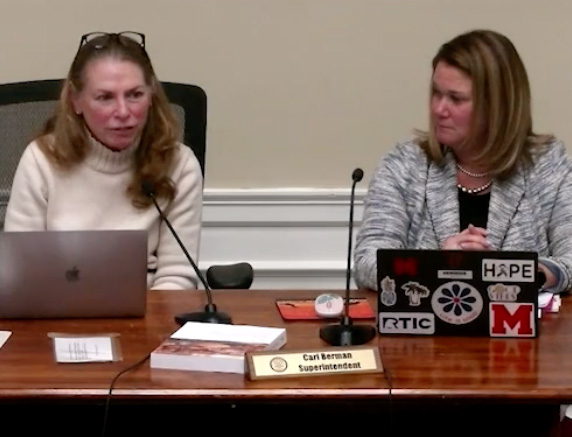
School Committee Member Margaret Driscoll, left, and Superintendent Cari Berman
Screenshot From MMTV
In their most recent meetings, the School Committee has been preparing for discussion of next year’s Melrose Public Schools budget, which will take place later this month.
Due to the $13.5 million override Melrose residents passed in November, this year’s budget process is likely to be quite different from the past two years, when the School Committee was faced with cutting line items and positions in order to make up significant budget deficits. But, officials noted, even funds from the override will only allow the Melrose Public Schools (MPS) to restore approximately half of the positions that were cut over the last two years.
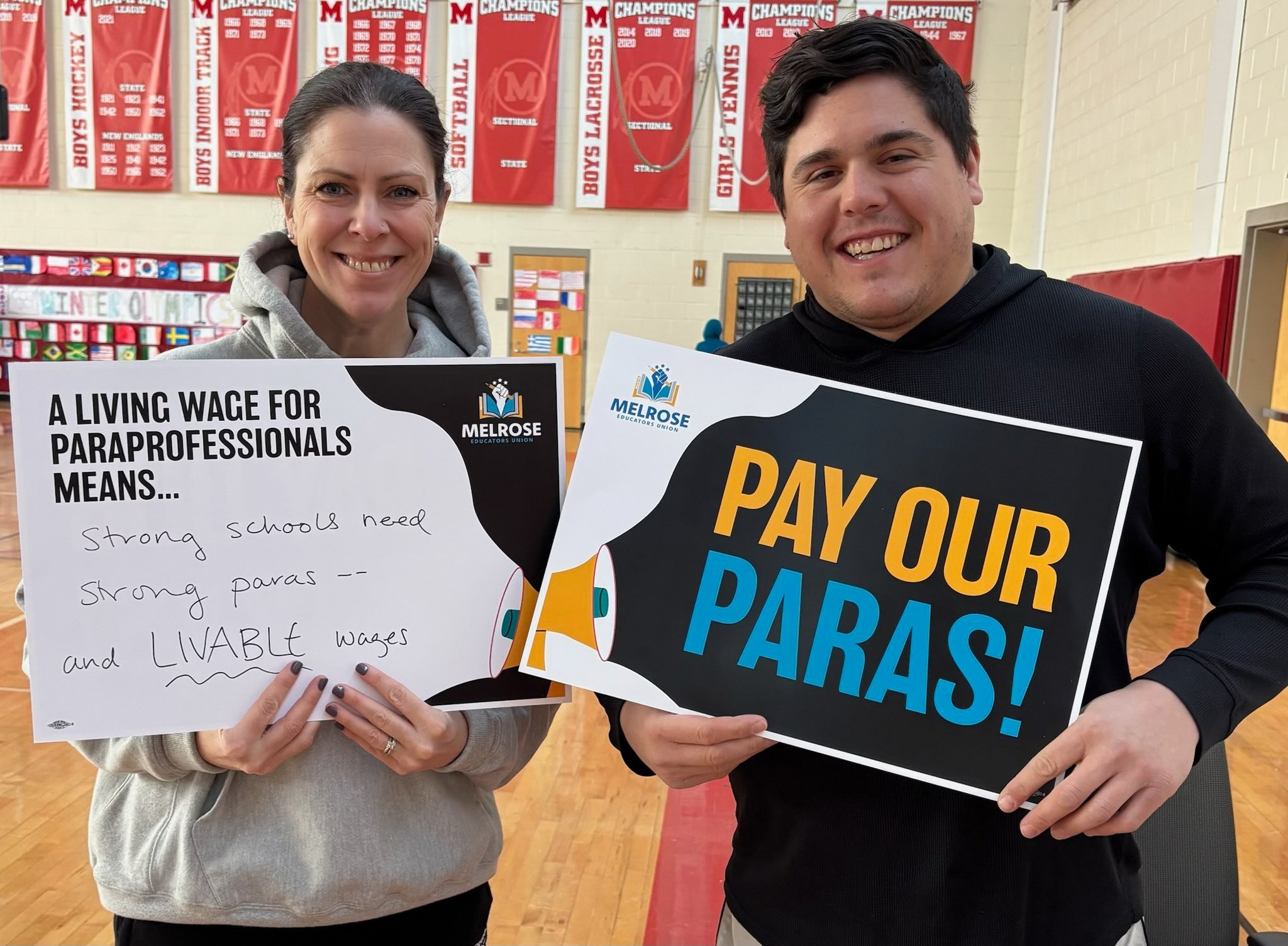
There are still a number of unknowns to be determined as part of the budget process. For one, the School Committee and the Melrose Educators Union (MEU) are currently negotiating three new contracts - for Unit A (teachers), Unit B (secretaries), and Unit C (paraprofessionals).
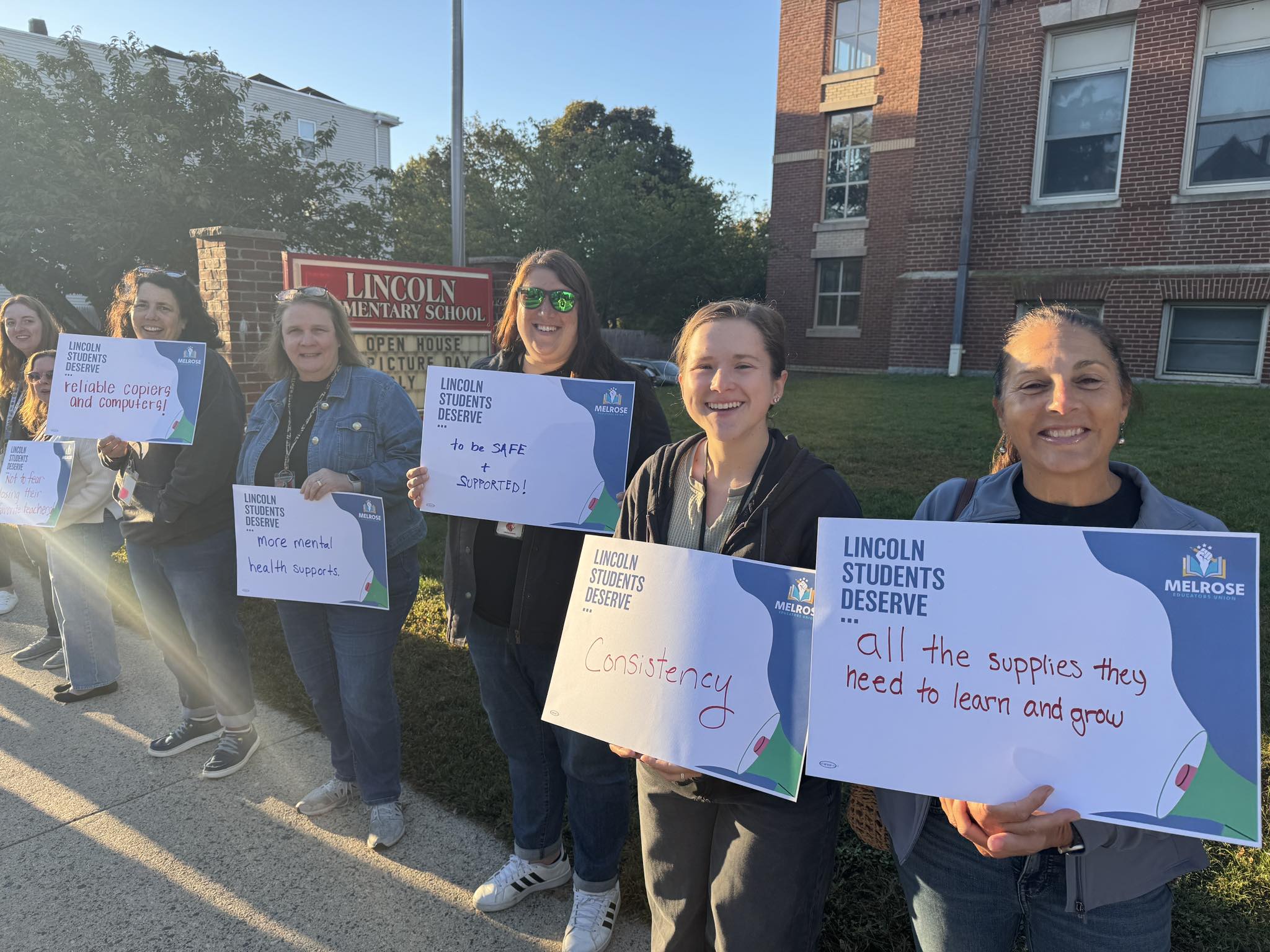
While bargaining sessions are not open to the public, the MEU has posted reactions to the negotiations on their social media, calling the School Committee’s most recent compensation proposal for Unit A “shockingly inadequate” and “disappointing and disrespectful,” although they stated the School Committee’s most recent proposal for Unit C was “a step in the right direction.”
Bargaining sessions are scheduled for March 18th and April 8th, which means that new contracts could be settled before the School Committee votes to send the school budget to the City Council in April - although, if negotiations stall, it’s also possible that the School Committee will need to vote on a school budget before compensation for many school employees has been settled.
Another aspect of the budget that has not yet been publicly shared is how much of the funds from November’s override will go into the MPS budget. (A number of expenditures that support the schools are not included in the MPS budget, including school nurses, custodians, capital improvements, and employee benefits.)
Because much of the override discussion centered on the schools, some residents were surprised to discover, when the City Council passed a supplemental budget incorporating override funds into the Fiscal Year 2026 budget in December, that only $3.8 million of the $13.5 million in override funds went directly into the MPS budget. Over half of the override funds in the supplemental budget went to capital expenditures, including for school building maintenance and improvements.
But under current contracts, salaries for city and school workers see increases that are greater than the 2.5% the city’s revenue is permitted, by law, to increase each year. This means that residents can expect that more of the override funds will go toward salaries in next year’s budget - although precisely how much, depends in part on the contracts that are currently under negotiation.
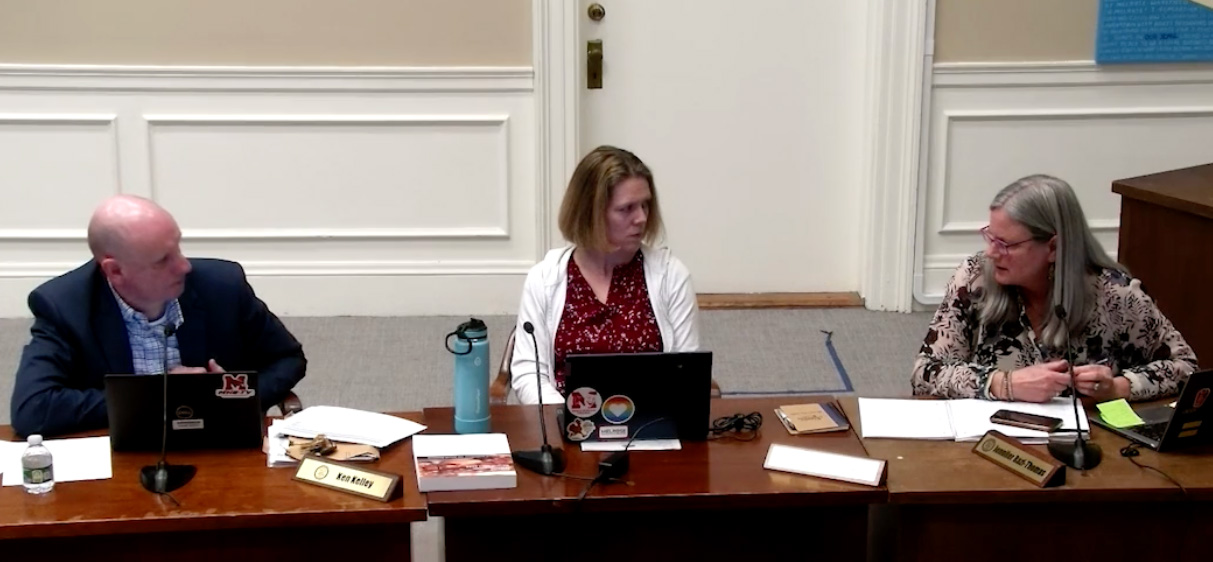
Left to right: Interim Deputy Superintendent Ken Kelley and School Committee Members Sheri Leo and Jennifer Razi-Thomas
Screenshot From MMTV
While the specifics of next year’s budget are expected to be released at the School Committee’s next meeting on March 24th, Superintendent Cari Berman and Interim Deputy Superintendent Ken Kelley suggested that it will largely follow the supplemental budget, which restored one teacher position at the Franklin Early Childhood Center; six teacher positions and one administrator position at the elementary level; 5 teacher positions at Melrose Veterans Memorial Middle School (MVMMS); 3 teacher positions at Melrose High School (MHS); and one administrator position to be shared between the two secondary schools, for a total of 17 positions.
“Our theme word for next year is stabilization,” said Kelley at a recent School Committee meeting. “All our hard work and collaboration with our city partners and the override is all building towards a stable financial system.”
“I think that strategic investment and being very thoughtful about where money is invested is critical,” reflected School Committee member Margaret Driscoll. “And it doesn't mean that we will necessarily go back to what was done before in every single case, I don't think. I would not like to see that. I would like to see outside-the-box thinking.”
While most of the MPS budget comes from the city and the state, over 10% of the schools’ budget comes from offsets - fees, tuition, and grant funding that the schools collect and use to support school operations. Some of the largest offsets come from Education Stations, the Franklin Early Childhood program, and fees for athletics and extracurricular activities. The School Committee will be voting to set those fees over the course of its next few meetings.
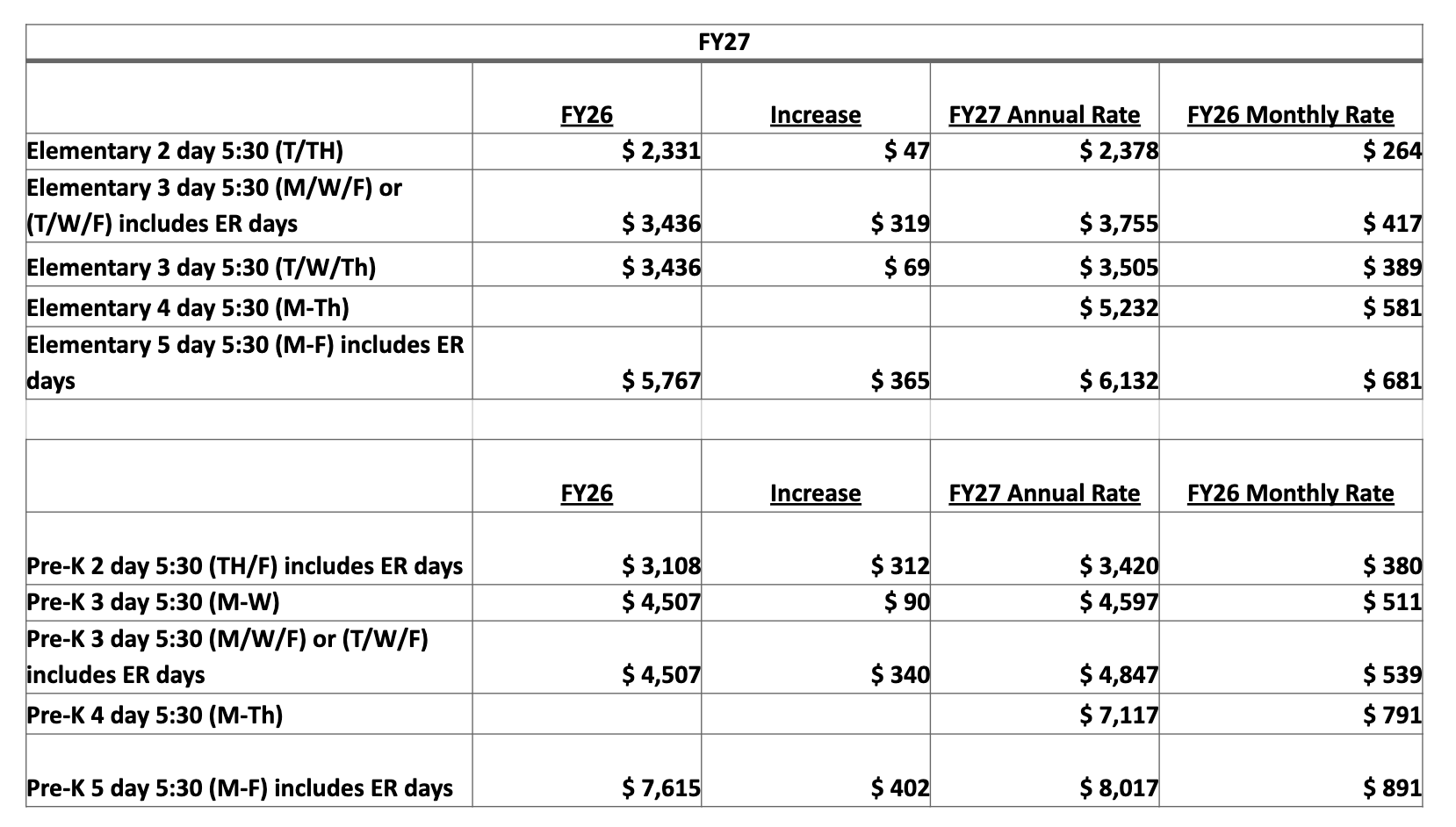
Proposed Fee Increase for Education Stations
From Melrose Public Schools
Education Stations, which offers after-school care for preschool and elementary students at all six of the district’s elementary schools, has seen fee increases of approximately 5% for the last two years. Jennifer Proulx, the director of Education Stations, asked for only a 2% increase this year, although she suggested eliminating the 3:30pm pickup option, and instead providing families with more flexibility as to which weekdays they would like their children to attend. (Families can pick up their children at any point between when school ends at 2:30pm and the end of Education Stations at 5:30pm, but they would pay for the entire time.)
“I had never heard of offering an early pickup option before I came to Melrose,” said Proulx. Only 200 of the over 800 students who attend Education Stations utilize the 3:30 pickup option, so eliminating it would allow the program to optimize staffing and streamline its offerings.
Parents of children who are too young to be left at home alone, who work full-time outside the home, often have difficulty finding childcare after school. In-home care can be expensive, and other options are not always ideal. But when fees for Education Stations increase, working families who rely on that care bear the costs. If the School Committee approves the proposed fee increases for Education Stations, a family who needs care every weekday will be paying over $6,000 per child per year.
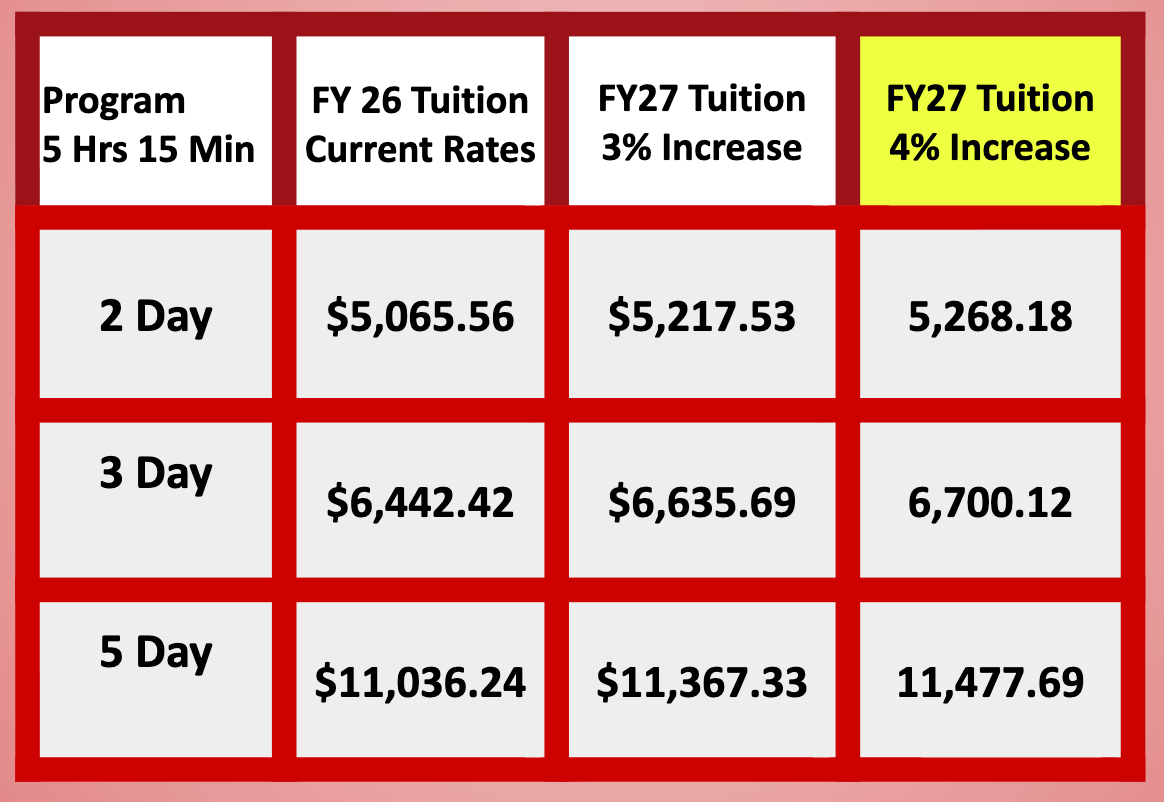
Proposed Tuition Increase for Franklin ECC Program
From Melrose Public Schools
The Franklin Early Childhood Program is another source of revenue for the district. All public school districts are legally required to educate students with disabilities starting at age three. Many school districts in Massachusetts choose to run some kind of preschool program, so that students with disabilities can learn alongside their peers. In Melrose, families can pay tuition to send their three- and four-year-old children to the Franklin preschool program.
The Franklin Early Childhood Program features licensed teachers, which many private daycares and preschools do not have, and educational programs that are specifically intended to ensure that students are successful when they enter elementary school. 240 students attend preschool at the Franklin program this year.
Tuition for the Franklin Early Childhood Program has seen significant increases in recent years, including an 8% increase for the 2023-24 school year and a 7% increase last year. Principal Andrea LaCau recommended that the School Committee adopt a 4% tuition increase for this year. This increase would mean that a family attending the Franklin five days a week would pay almost $11,500 per year. The school day at the Franklin only runs until 1:30pm, so families who need care until 5:30pm would pay an additional $8,000 per year, for total tuition of almost $20,000 per year. (This does not include school holidays and summer vacation, which many families need to find additional care for.)
The one area where district leaders have not asked the School Committee to raise fees is for extracurricular activities at the middle- and high-school level. Fees were raised by 10% last year, and will remain at that level, except for Ice Hockey, which last year was raised to $715 - the highest fee, in part due to the need to rent ice time for the team. School leaders felt that the fee had become a barrier to student participation in some cases, and recommended returning it to last year’s level of $650.
In addition to hammering out details ahead of setting next year’s budget, school officials are also looking farther into the future.
Testing data continues to show students struggling at MVMMS, and gaps in achievement for students with disabilities and multilingual learners.
One area where MPS is aiming to invest is in High-Quality Instructional Materials - curriculum materials that are research-based and intended to support diverse learners. $1.5 million of the override funds in this year’s supplemental budget went to curriculum materials, including a multiyear contract for math curriculum for the district.
“We have incredibly talented educators,” said Executive Director of Academics & Accountability Melanie Acevedo. “We have people who are working really hard, and our data’s just not showing it. So one of the things we look at, when we start to see that, is what resources and materials are we using, and are they up-to-date?”
But not everyone feels that investing in new curriculum materials is the best use of the district’s money: some argue that the money is better spent in paying teachers more, and trusting their professional expertise.
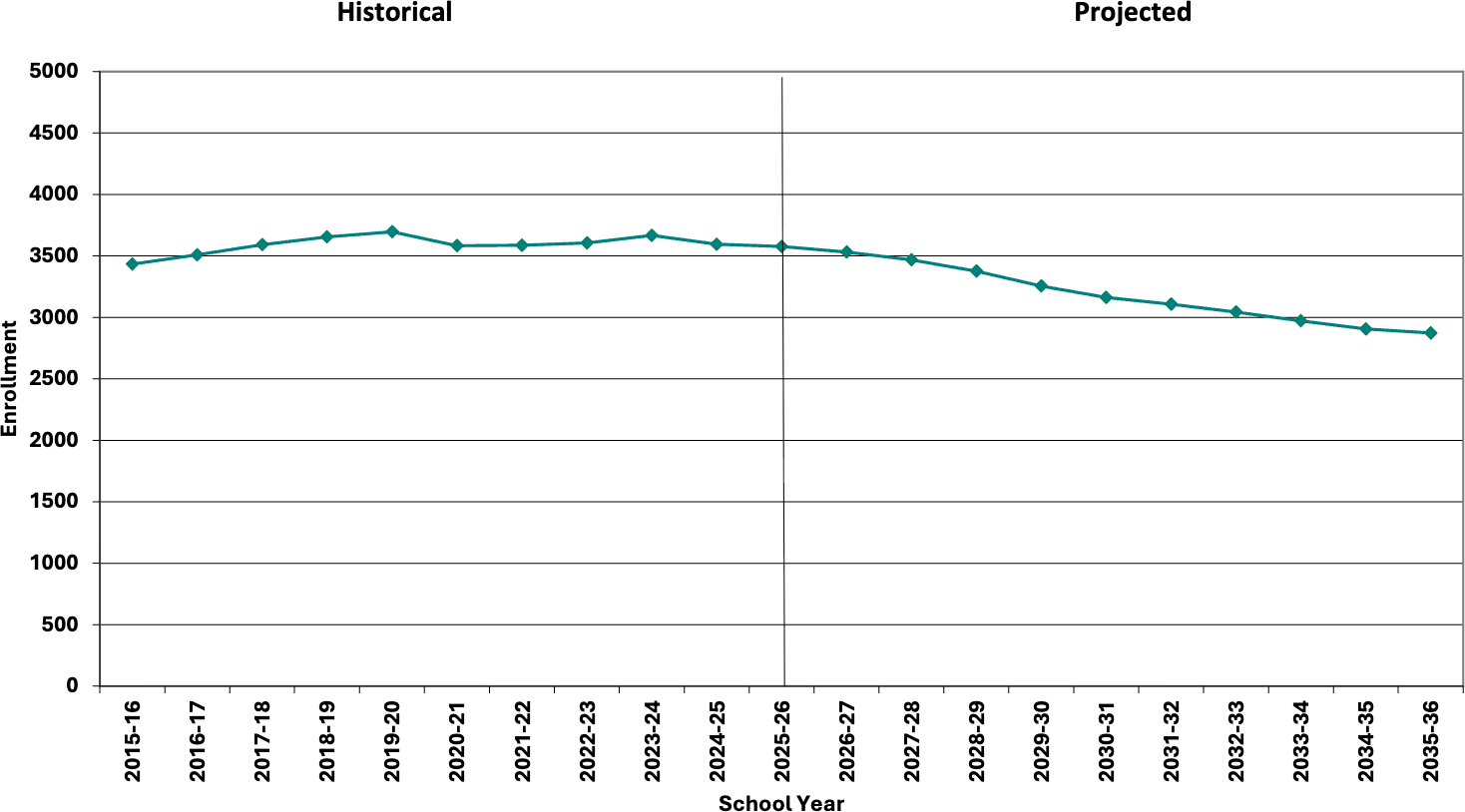
Top: Enrollment Projection for Melrose Public Schools
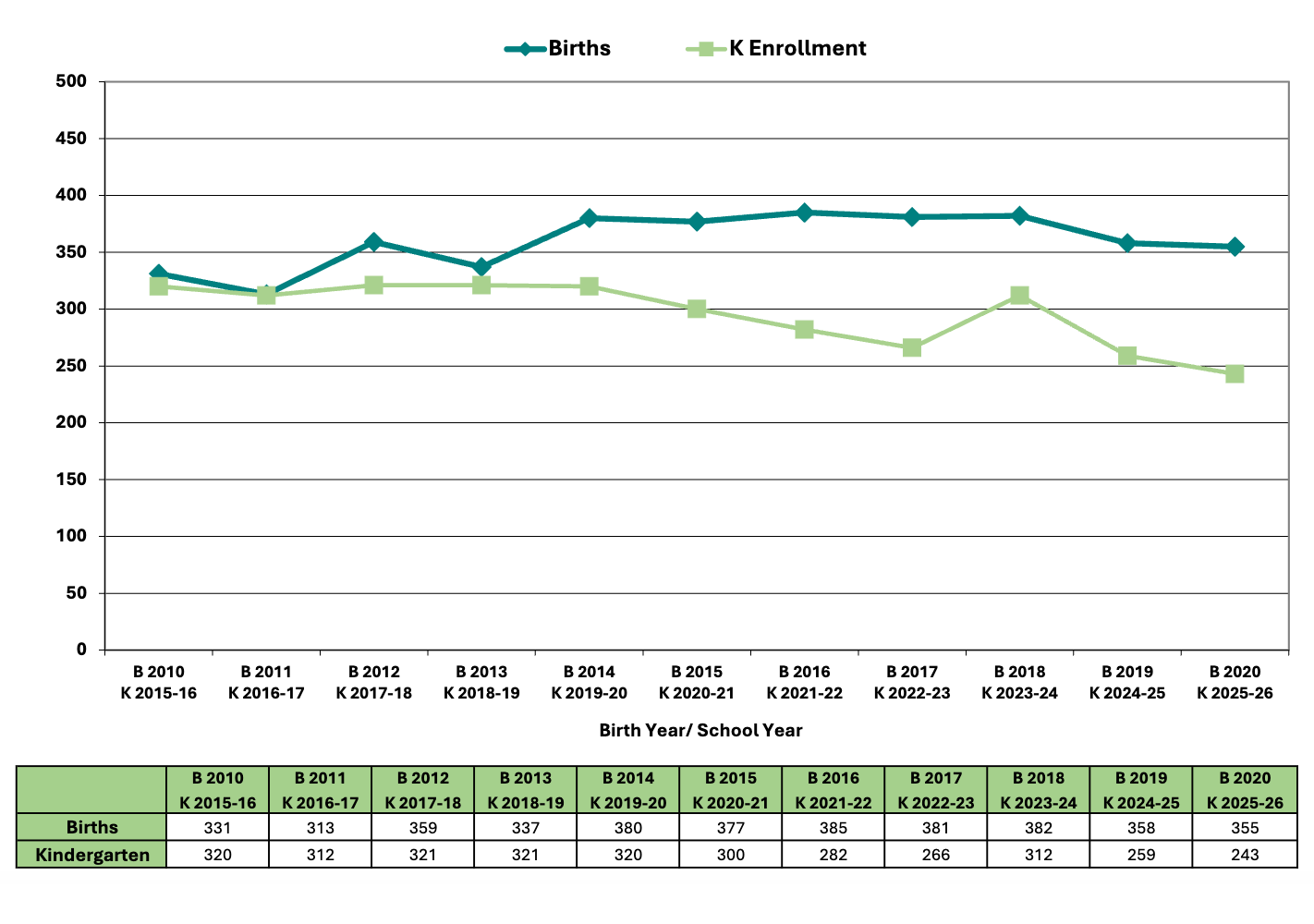
Bottom: Births to Kindergarten Enrollment
From Melrose Public Schools
“And we are working on redefining our core instructional practices,” Acevedo went on. “We’re looking at what those very consistent practices need to be in every building, in every grade, for every student, for every teacher. We’re having conversations about: what does this need to look like for the students who are in front of us now?”
MPS is also working on a new strategic plan this spring, which will go into effect for next school year.
Looking farther into the future, the School Committee also looked at an enrollment projection from the New England School Development Council, which projects a nearly 20% decline in enrollment over the next decade.
Part of that projection is based on declining numbers of families sending their children to public kindergarten in Melrose since the pandemic, including over the last two years, when school funding was uncertain due to a failed override vote in June 2024. School officials will surely be watching to see whether kindergarten enrollment picks back up this year, with funding now more stable.
“The difference between births and kindergarten enrollment is significant,” said School Committee member Matthew Hartman, “and I think that's a gap that we need to hopefully close by encouraging more families to make sure they're choosing the Melrose Public Schools. It's an all-around approach to make sure that people are walking away with the message that the Melrose Public Schools are excellent, and we want them in the schools here. And it's not only a community-building exercise, it's a financial impact - because when enrollment stalls or slows down or reduces, it does have a serious financial impact. We'll see minimal growth in our state aid as a result of enrollment stagnation or decline.”
“I think we really need to look at our charter school enrollment for kids in Melrose,” added School Committee member Jennifer Razi-Thomas, “and figure out how to get some of those kids to decide that Melrose Public Schools are excellent, and they should come back, or they shouldn't go at all, because we've lost close to a hundred students to the charter schools over the last five or six years.”
Last year, a committee was reestablished to create a school facilities master plan. The city’s last such plan was created in 1997 and led to the reconstruction of MVMMS and the Lincoln and Roosevelt Schools.
“That group met with the consultant that we selected through the procurement process to start assessing all of our buildings,” said Mayor Jen Grigoraitis, “and it's really to look at: What is the space that we have? How can it be better utilized? And what are the really long-term future needs of the Melrose Public Schools? What does this district look like when many of the kids that are currently in it have graduated and are long gone?”
The School Committee is expected to begin deliberating on the proposed budget for the 2026-27 school year at their next meeting on Tuesday, March 24th at 7pm. Anyone interested in sharing their thoughts can contact School Committee members, attend drop-in hours at La Qchara on Saturday, March 28th at 8:30am, or speak during public comment on March 24th.