School Committee This Week: Staffing, Technology, and Contract Negotiations
By Ellen Putnam
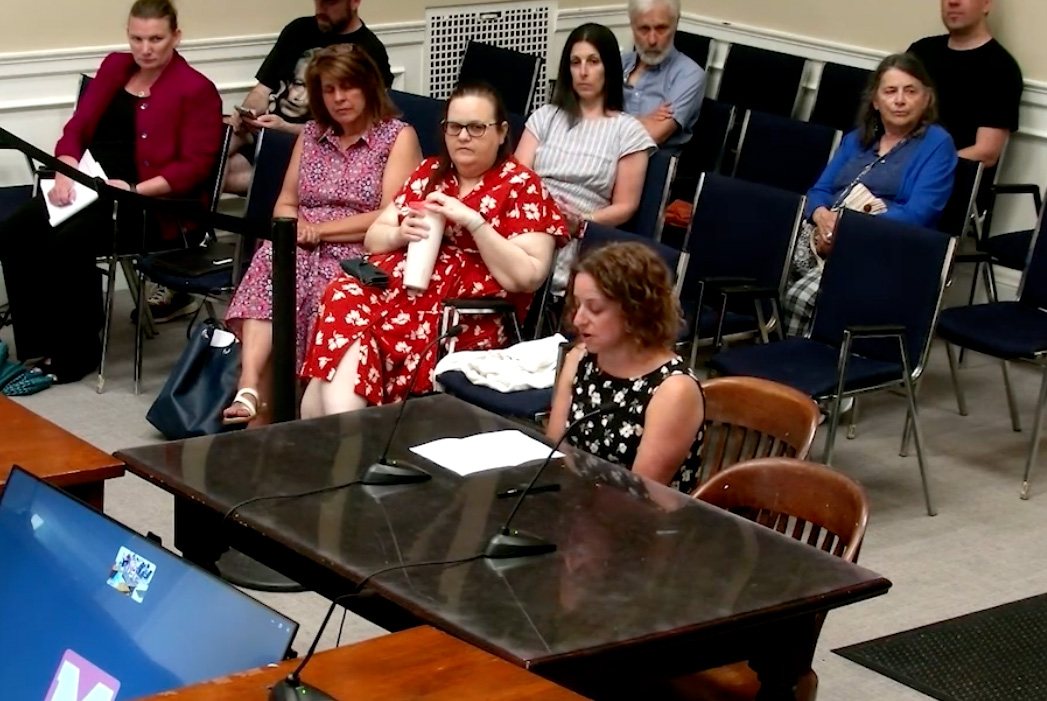
Laura Polica speaking during public comment on behalf of the arts booster organizations
Screenshot from MMTV
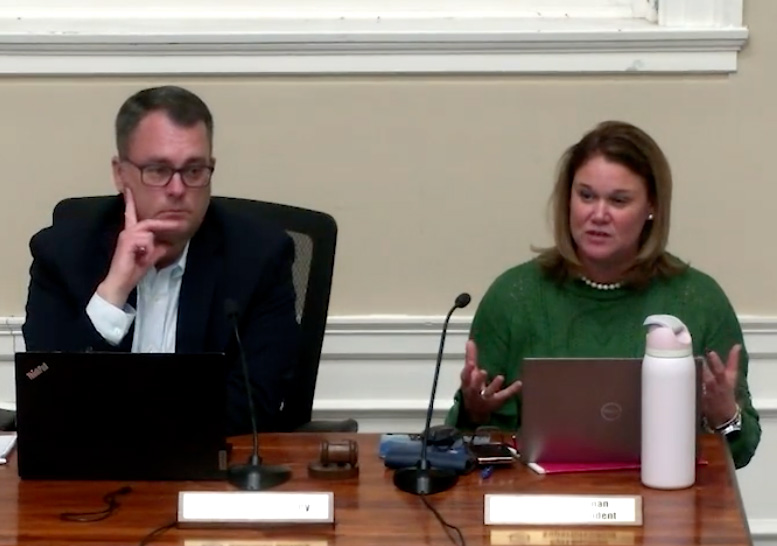
This week’s School Committee meeting addressed several topics that could potentially have significant effects on the 2026-27 school year, including class sizes and staffing, the Melrose Veterans Memorial Middle School (MVMMS) plan of study, and the district’s technology plan. Meanwhile, a statement from the Melrose Educators Union (MEU) suggested that the MEU and the School Committee may be getting closer to agreeing on contracts for next year.
The meeting began with several comments from community members in favor of returning the Visual and Performing Arts Director position to the budget.
This position had originally been slated for elimination in the first round of budget cuts, in the 2024-25 school year, but pressure from parents and community members led then-Interim Superintendent John Macero to preserve the position for that year. The position was then eliminated in the second, deeper round of cuts in the 2025-26 school year.
Steve Black, who had held the position for several years, took on the position of Assistant Principal at MVMMS for this year, while maintaining some of the duties he had performed as Visual and Performing Arts Director on a stipend basis. Some of the role’s other duties were taken on by teachers.
The district’s arts booster organizations (Friends of Melrose Drama, Band-Aiders, Orchestrators, and Harmonizers) wrote a letter that Friends of Melrose Drama board member Laura Polica read during public comment, stating: “We understand the difficult financial decisions facing the district. However, we are concerned that [keeping the Visual and Performing Arts Director position on a stipend basis] significantly underestimates the scope of the role and the impact it has on students, teachers, and the broader school community. The work includes curriculum leadership, staff support, production management, budgeting, scheduling, event oversight, community partnerships, grant coordination, student opportunities, and extensive evening and weekend commitments throughout the year.”

The Melrose High School production of Les Misérables was one of many high-quality arts experiences students had in Melrose this year
Photo from Melrose Drama
“We were fortunate this year that Mr. Black continued supporting the department while also serving as Assistant Principal,” the letter continued. “His willingness to continue carrying many of these responsibilities helped maintain the strength and stability of the programs during a transitional year. At the same time, teachers in the arts still took on additional burdens in order to maintain student experiences.”
The letter referenced art shows, band events, and the high school production of Les Misérables as examples of the strength of arts programming in the Melrose Public Schools, and why the position is needed.
“The arts are not secondary in Melrose,” the letter continued. “For many students, they are where students find confidence, connection, belonging, and purpose. We respectfully urge the Committee to reconsider whether a stipend position can realistically sustain a program of this size, complexity, and quality over the long term. Teachers and volunteers cannot reliably or sustainably fill these gaps. We believe this decision will have lasting consequences for students and for programs that have long been a source of pride for our community.”
Other parents and community members spoke during public comment to express their support for returning the position to the budget, in order to ensure that the arts in Melrose receive the support they need to thrive.
This is part of a larger discussion of the impact of override funds. While restoring 17 positions allowed school leadership to address some of the most significant problems that had been caused by this year’s budget cuts, including decreasing some of the largest class sizes, the Melrose Public Schools still have not returned to prior staffing levels, leaving some parents and staff members wondering whether cuts that the schools could absorb temporarily can be sustained in the long-term.
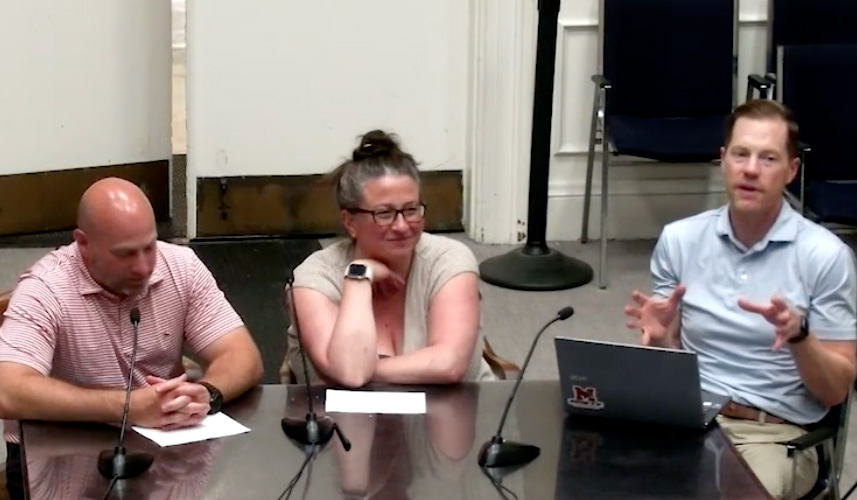
Left to right: Secondary Principal Jason Merrill, MVMMS Assistant Principal Michelle Sewyck, and Deputy Principal Bryan Corrigan
Screenshot from MMTV
Superintendent Cari Berman provided an update on enrollment, noting that kindergarten enrollment appears likely to hold steady for this year, and that one of the 17 positions restored by the override funds will likely be an additional kindergarten teacher at the Roosevelt School, where that position had been cut last year. (Parents of rising kindergartners who are anxiously awaiting their children’s placements are likely to be pleased with this news!)
Enrollment projections that were shared with the School Committee back in February had suggested that kindergarten numbers would continue to drop over the next several years, in sync with declining birthrates in the region, but current enrollment numbers do not appear to bear this out so far for this year. Because state funding is dependent on enrollment numbers, declining enrollment can cause major problems for school systems.
At MVMMS, where the override restored five positions, allowing the team model to be restored in the sixth grade and partially in the seventh grade, Secondary Principal Jason Merrill and his team are looking at adding additional academic and socio-emotional supports for students.
“We recognize it’s a tremendous need,” said Deputy Principal Bryan Corrigan. “We want to make sure that we have supports available for all students, including those who do not have an identified special education need.”
In addition to Literacy and Math Lab classes for all 6th and 7th grade students, which provide additional support outside of regular English and Math classes, and targeted intervention blocks for all students, students can be recommended for additional academic and socio-emotional support classes and groups as needed.
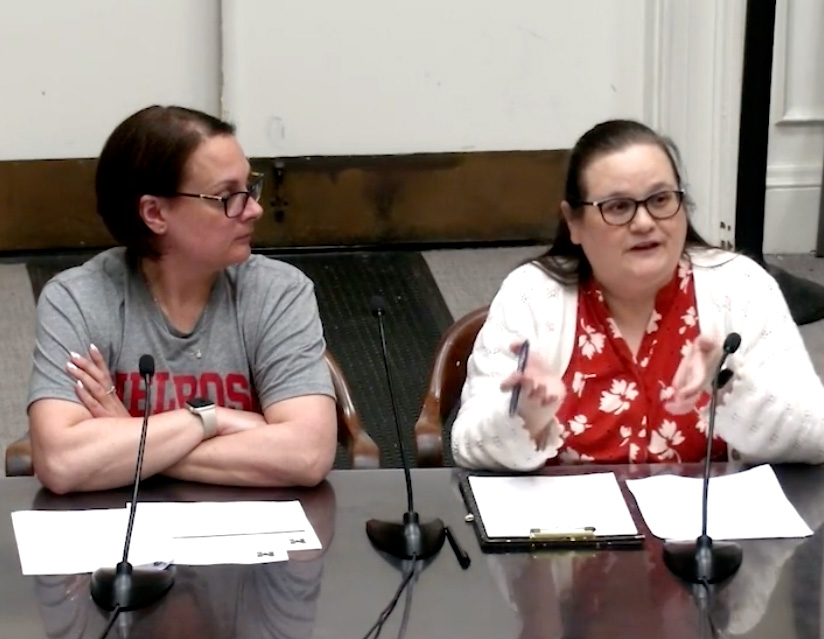
Susan Jones, left, and Melanie Acevedo
Screenshot from MMTV
The School Committee also heard an update on the district’s technology plan.
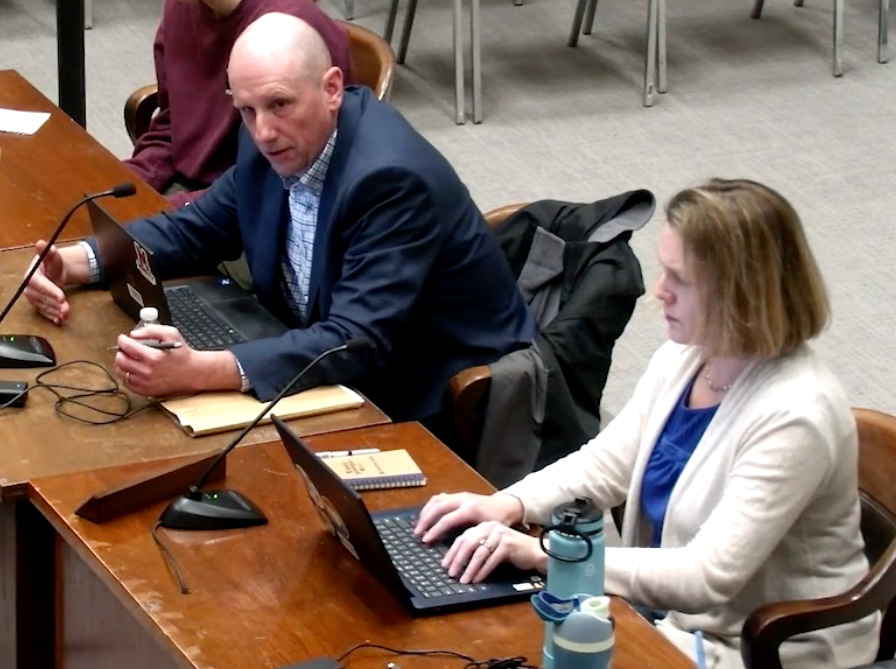
Susan Jones, a fifth grade teacher and co-facilitator of the district’s Technology Advisory Committee, shared her work with her students around Artificial Intelligence, which is a topic many school districts around the country are currently working on addressing.
Jones shared how, when an AI tool provided inaccurate information for a student, “it opened up a really powerful conversation, and I can tell you that every student is already thinking about AI a little bit differently and has learned that lesson in real-time: that it is a tool, but it does require a critical eye.”
Jones also shared that, while students are learning about digital tools like AI, “my students are not on the Chromebook most of the day. A lot of writing and brainstorming is being done on paper.” She also noted that the AI tools that are accessible in her classroom are limited, so “there is nothing that students go on in my classroom that they have not been given very strict parameters around.”
Executive Director of Academics and Accountability Melanie Acevedo added that, while teachers are required to use the IXL program for benchmark assessments, otherwise “teachers have autonomy, and the choice is what makes sense for their students.”
She also shared that she has observed, overall, less reliance on devices in the district than she had seen immediately following the pandemic. “In general,” she said, “I’m not seeing as much of the one student, one device, closed off in their own space. I think a lot of our very talented teacher team has moved away from a lot of that, and I think our new curriculum products will help us do that even more.”
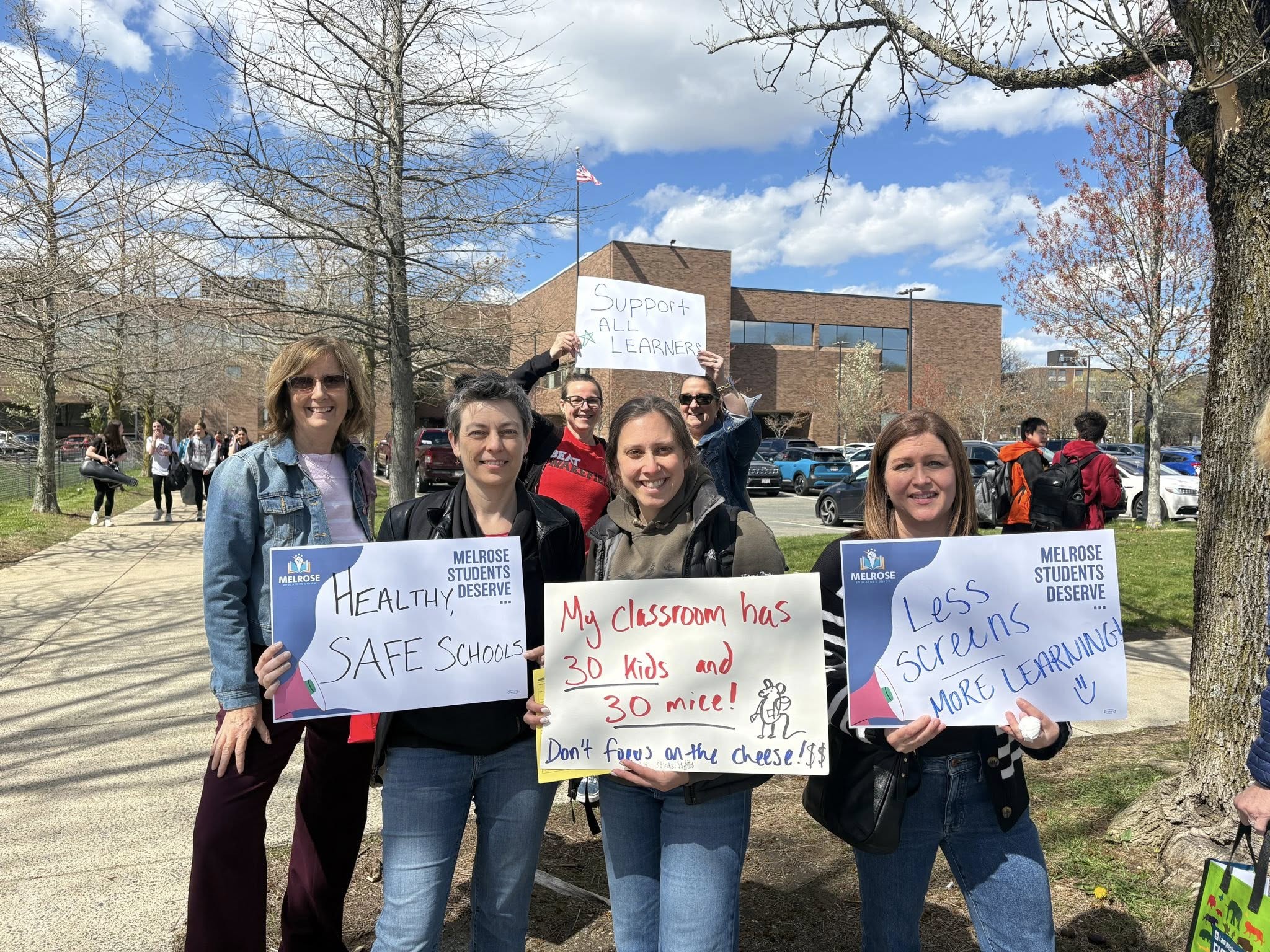
Photo From MEU
On Wednesday, the School Committee and the MEU held another bargaining session to settle on new contracts for teachers, school secretaries, and paraprofessionals. While bargaining sessions are closed to the public and the School Committee does not discuss ongoing negotiations, the MEU shared that, with this week’s bargaining session, “We are getting closer to a fair contract.”
Bargaining sessions have been held at least once a month since November, and so far, School Committee and MEU representatives have been unable to reach an agreement. During the last contract negotiations in 2023, teachers voted to go on strike before a deal was reached at the last minute.
Up to this point, the School Committee and the MEU have been unable to agree on several issues, including compensation, parental leave, and keeping schools rodent-free and at a comfortable temperature - which can be a problem in Melrose’s older school buildings, in particular.
Settling the MEU contracts would provide firm numbers for salaries for the next three years, giving school and city officials a better idea of what to expect in terms of costs.