Melrose Votes For Democratic State Leaders, Ballot Questions
By Ellen Putnam
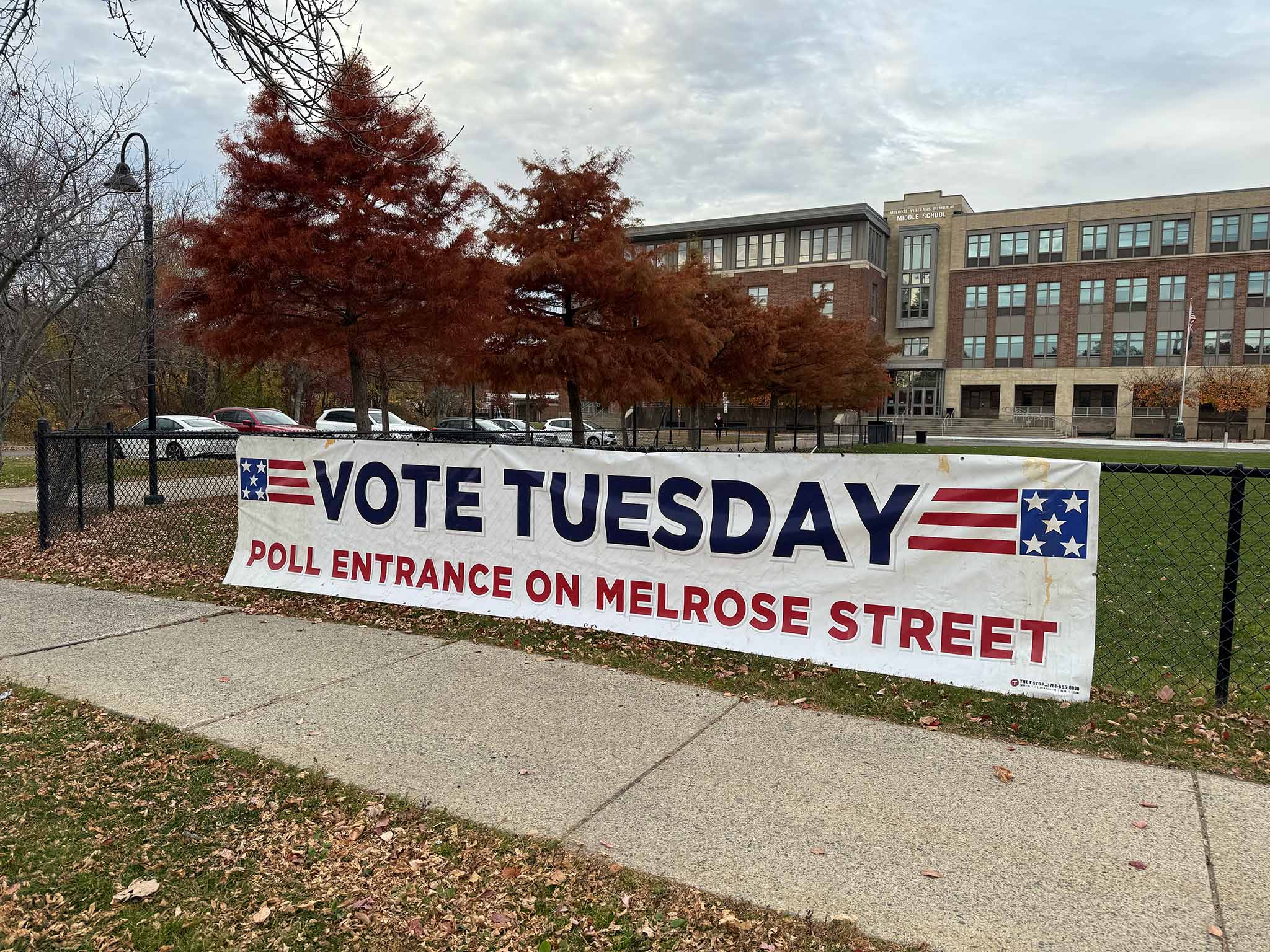
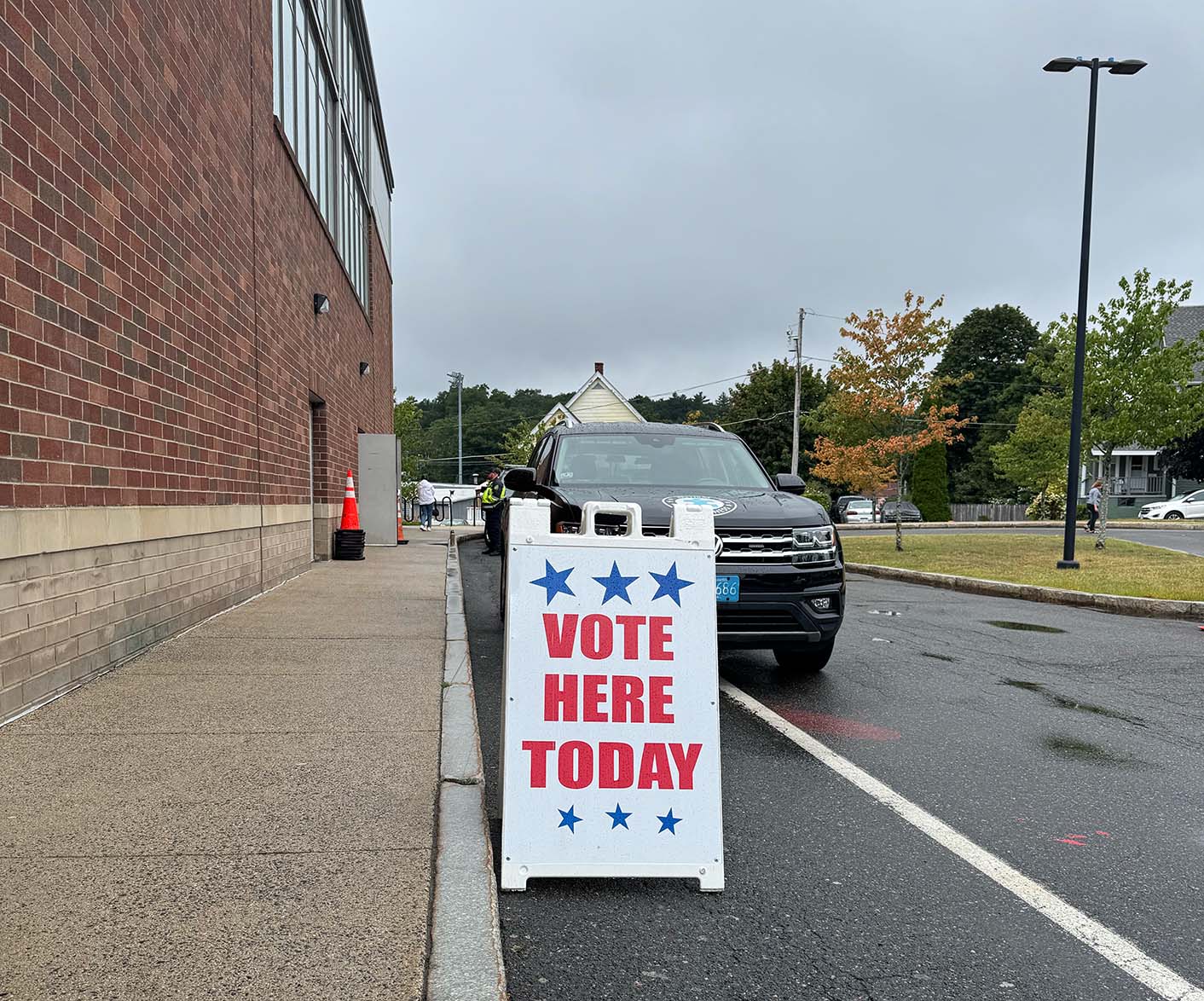
Over 14,000 Melrose voters turned out to vote early, by mail, and in person on Tuesday. Voters overwhelmingly supported Democratic candidates for state and federal offices, and generally voted with the state majority on the nine ballot questions.
This election’s turnout of 64.5% was slightly higher than Melrose saw in 2022 and 2024, but lower than the 87% of registered voters who cast a ballot in 2020. Detailed election results for Melrose can be found here.
Melrose voters in this election generally voted more Democratic than the state average, with:
- 74.4% of Melrose voters supporting Ed Markey for Senate compared to 62.3% statewide;
- 72.8% of Melrose voters supporting Maura Healey for Governor compared to 63.4% statewide;
- 72.9% of Melrose voters supporting Andrea Campbell for Attorney General compared to 65.7% statewide;
- 79.2% of Melrose voters supporting Bill Galvin for Secretary of State compared to 71.3% statewide;
- 72.8% of Melrose voters supporting Deb Goldberg for Treasurer compared to 66% statewide;
- 88.2% of Melrose voters supporting Diana DiZoglio for Auditor compared to 83.9% statewide.
Several other races on the ballot were uncontested, including Katherine Clark for U.S. Congress, Terrence Kennedy for Governor’s Council, Kate Lipper-Garabedian for State Senate, Leila Migliorelli for State House of Representatives, and Marian Ryan for District Attorney.
On the ballot questions, Melrose voted as follows:
- 88.5% of Melrose voters and 86% of voters statewide supported Question 1, which will subject the state legislature and the Governor’s office to public records law. The legislature is currently considering their own measure to expand the public records law, which could pass before the end of the session. Precisely which records will end up subject to public scrutiny may ultimately be decided by the courts.
- 70.7% of Melrose voters and 64.2% of voters statewide supported Question 2, which allows employees of the Committee for Public Counsel Services, who provide no-cost legal representation for criminal defendants who cannot afford a lawyer, to form a union.
- 64.1% of Melrose voters and 61.2% of voters statewide opposed Question 3, which would have eliminated party primary elections in favor of a single, all-party primary. This question attracted the most money on the “Yes” side of any of this year’s nine ballot questions, with the “Yes” side spending $5.8 million and the “No” side only spending $50,000. However, that spending did not translate to a win for the “Yes” side.
- 64.8% of Melrose voters and 56.6% of voters statewide supported Question 4, which will allow voters to register on Election Day. Secretary of State Bill Galvin campaigned in support of the measure and contributed $80,000 of his own campaign funds to the “Yes” campaign.
- 61.1% of Melrose voters opposed Question 5, which would change how much revenue the state can collect each year. This question is still too close to call statewide.
- 58.5% of Melrose voters and 61% of voters statewide supported Question 6, which will create a “Nature For All” fund dedicated to conservation efforts from specific state sales tax revenue.
- 56.2% of Melrose voters supported Question 7, which would require cities and towns to allow single-family homes to be built on lots that are at least 5,000 square feet and have municipal water and sewer service. This question is also still too close to call.
- 79% of Melrose voters and 75% of voters statewide opposed Question 8, which sought to repeal the sale of recreational marijuana, which voters approved in a ballot question in 2016. This question saw significant spending on both sides, with the “Yes” committee (which sought to repeal marijuana) spending over $3.6 million, and the “No” committee spending almost $2.7 million.
- 79.9% of Melrose voters and 67.2% of voters statewide supported Question 9, which upheld the 2024 gun control law passed by the legislature. This law regulates “ghost guns” and tightens requirements for obtaining firearms.
Voters in the 32nd Middlesex state representative district also saw a nonbinding Question 10, which asked “Shall the Representative from this District be instructed to vote in favor of legislation or rules to reduce the House Speaker’s and Senate President’s control over state legislators’ stipends (extra pay) and to provide stipends only to legislators who do significant extra work that is transparent and accountable to the public?” 81% of Melrose voters supported this question, which saw similar support in the precincts of Wakefield and Malden that are also in the 32nd Middlesex district.